Hemoglobin (Hb): What Low or High Levels Mean
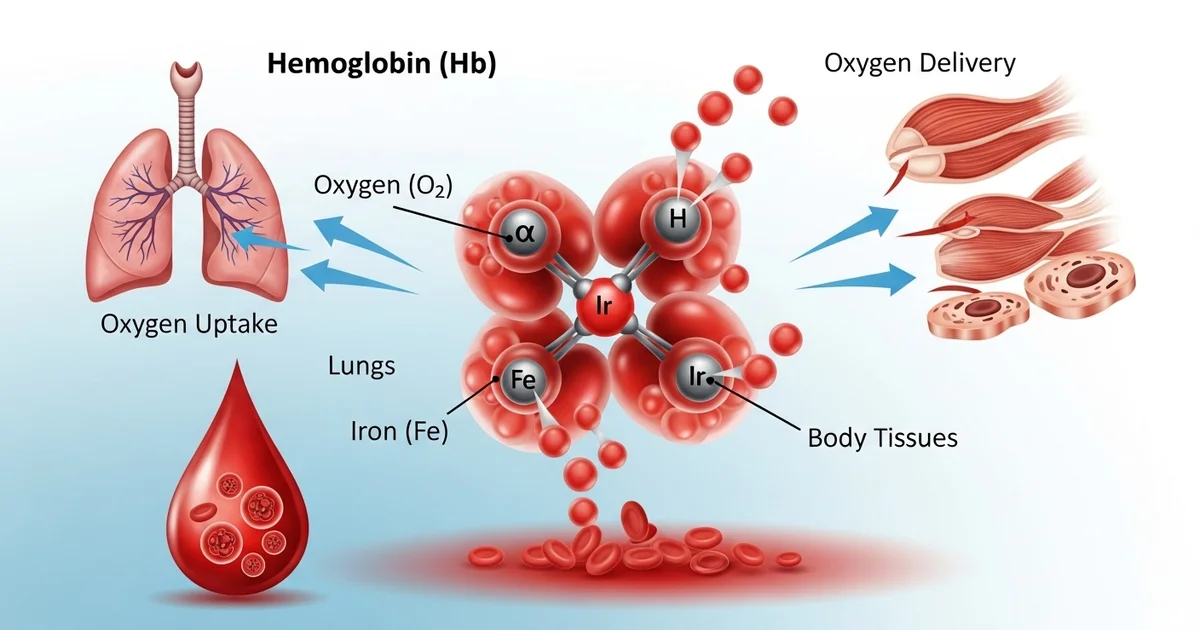
Direct answer: A hemoglobin (Hb) test measures the oxygen-carrying protein in your red blood cells. It's a key part of a complete blood count (CBC) used to screen for, diagnose, and monitor conditions like anemia (low hemoglobin) and polycythemia (high hemoglobin).
TL;DR The hemoglobin (Hb) test is a routine blood test that measures the amount of hemoglobin in your blood. This protein is essential for carrying oxygen from your lungs to the rest of your body. Your hemoglobin level provides a snapshot of your body's ability to transport oxygen and is a critical indicator of overall health. It's used to diagnose conditions like anemia, assess blood loss, and monitor chronic diseases. Results are compared to reference ranges that vary by age and sex.
Low Hemoglobin (Anemia): Levels below the normal range indicate anemia. Common causes include iron or vitamin deficiencies, chronic diseases, bone marrow problems, or blood loss. Symptoms often include fatigue, pale skin, shortness of breath, and dizziness.
High Hemoglobin (Polycythemia): Levels above the normal range can be caused by dehydration, smoking, living at high altitudes, or certain lung diseases. In rare cases, it's due to a bone marrow disorder called polycythemia vera. Symptoms may include headaches, dizziness, and an increased risk of blood clots.
What is Hemoglobin?: A protein in red blood cells that contains iron and is responsible for transporting oxygen throughout the body.
Why It's Tested: To screen for anemia, diagnose blood disorders, monitor chronic conditions, and evaluate overall health as part of a complete blood count (CBC).
Normal Ranges: Generally, 13.5-17.5 g/dL for men and 12.0-15.5 g/dL for women, but these values vary. Always check your lab's specific reference range.
Symptoms to Watch: Persistent fatigue, weakness, shortness of breath, pale skin, or unusual itching can be signs of abnormal hemoglobin levels and warrant a discussion with your doctor.
Want the full explanation? Keep reading ↓
The hemoglobin (Hb) test is a cornerstone of diagnostic medicine, providing crucial insights into a person's overall health. As an integral component of the complete blood count (CBC), this simple yet powerful test helps healthcare providers screen for, diagnose, and monitor a wide array of conditions, most notably anemia and polycythemia. Understanding what hemoglobin is, why it's tested, and what the results mean is essential for anyone seeking to comprehend their health status.
What is Hemoglobin?
Hemoglobin is a complex protein found within red blood cells, responsible for their distinctive red color and, more importantly, their vital function. Its primary role is to transport oxygen from the lungs to the body's tissues and organs, and to carry carbon dioxide back to the lungs to be exhaled. Each hemoglobin molecule is composed of four protein chains, each bound to a heme group containing an iron atom. It is this iron atom that reversibly binds to oxygen, allowing efficient transport.
Without adequate hemoglobin, the body's tissues would not receive enough oxygen, leading to a range of debilitating symptoms. To delve deeper into its intricate structure and life-sustaining role, you can explore what hemoglobin is and its function in red blood cells.
The Hemoglobin Test: What It Measures
The hemoglobin test measures the concentration of hemoglobin in a given volume of whole blood. This measurement is typically expressed in grams per deciliter (g/dL) or grams per liter (g/L). It provides a quantitative assessment of the oxygen-carrying capacity of your blood.
How the Test is Performed
The hemoglobin test is straightforward. A healthcare professional will draw a small sample of blood, usually from a vein in your arm, using a needle. This process is quick and generally well-tolerated. The blood sample is then sent to a laboratory for analysis. Modern automated hematology analyzers can accurately measure hemoglobin levels along with other CBC parameters in a matter of minutes.
Hemoglobin as Part of a Complete Blood Count (CBC)
The hemoglobin test is never performed in isolation; it's always part of a CBC. A CBC is a comprehensive panel of tests that evaluates the different components of your blood, including red blood cells, white blood cells, and platelets. Within the CBC, hemoglobin is assessed alongside other red blood cell indices such as:
- Red Blood Cell (RBC) Count: The total number of red blood cells.
- Hematocrit (Hct): The percentage of blood volume occupied by red blood cells.
- Mean Corpuscular Volume (MCV): The average size of your red blood cells.
- Mean Corpuscular Hemoglobin (MCH): The average amount of hemoglobin in a single red blood cell.
- Mean Corpuscular Hemoglobin Concentration (MCHC): The average concentration of hemoglobin in a single red blood cell.
These parameters, when interpreted together, provide a much more complete picture of red blood cell health than hemoglobin alone, helping to pinpoint the specific type and cause of any abnormality.
Why is a Hemoglobin Test Performed?
A hemoglobin test is a routine and invaluable diagnostic tool used for various clinical purposes:
- Screening for Anemia: This is the most common reason. Anemia is a condition characterized by a lower-than-normal number of red blood cells or a reduced amount of hemoglobin within them, leading to decreased oxygen delivery.
- Diagnosing Specific Conditions:
- Anemia types: Iron deficiency anemia, vitamin B12 deficiency anemia, folate deficiency anemia, anemia of chronic disease, hemolytic anemia, aplastic anemia, sickle cell anemia, thalassemia.
- Polycythemia: Conditions where there are abnormally high levels of red blood cells or hemoglobin.
- Bone marrow disorders: Affecting blood cell production.
- Kidney disease: Which can impair erythropoietin production (a hormone stimulating red blood cell production).
- Monitoring Chronic Diseases: For individuals with long-term conditions like kidney disease, inflammatory bowel disease, cancer, or autoimmune disorders, hemoglobin levels are regularly checked to monitor disease progression and treatment effectiveness.
- Assessing Blood Loss: In cases of acute or chronic bleeding (e.g., gastrointestinal bleeding, heavy menstrual periods, trauma), hemoglobin levels help quantify blood loss.
- Evaluating Nutritional Status: Deficiencies in essential nutrients like iron, vitamin B12, and folate directly impact hemoglobin production.
- Pre-Surgical Evaluation: To ensure a patient has adequate oxygen-carrying capacity before surgery and to identify potential risks.
- Monitoring Treatment Effectiveness: For patients receiving treatment for anemia or other blood disorders, hemoglobin levels are monitored to assess their response to therapy.
Understanding Your Hemoglobin Results: Reference Ranges
Interpreting hemoglobin results requires an understanding of reference ranges, which are typically established by laboratories based on a healthy population. These ranges can vary slightly between labs due to different equipment and methodologies. Furthermore, normal hemoglobin levels differ based on several factors, including age, sex, and physiological state.
Here's a general table of hemoglobin reference ranges:
| Population | Normal Range | Units | Notes |
|---|---|---|---|
| Adult Men | 13.5 - 17.5 | g/dL | Varies by lab and individual |
| Adult Women (non-pregnant) | 12.0 - 15.5 | g/dL | Lower values common during menstruation |
| Pregnant Women | 11.0 - 14.0 | g/dL | Lower due to hemodilution and increased plasma volume |
| Children (age-dependent) | 11.0 - 16.0 | g/dL | Newborns have highest levels, then drops, gradually rises with age |
Please note: These ranges are general guidelines. Always refer to your specific lab report's reference range and discuss your results with your healthcare provider.
For a more detailed breakdown of how these values vary across different demographics, you can consult our article on hemoglobin normal range by age and sex.
Low Hemoglobin Levels (Anemia)
A hemoglobin level below the established reference range for your age and sex indicates anemia. Anemia is not a disease itself but rather a sign of an underlying medical condition. It means your body isn't getting enough oxygen, leading to a variety of symptoms.
Common Causes of Low Hemoglobin
Low hemoglobin can result from three main mechanisms:
- Decreased Red Blood Cell Production:
- Iron deficiency: The most common cause worldwide. Iron is crucial for heme synthesis.
- Vitamin B12 or folate deficiency: Essential for DNA synthesis and red blood cell maturation (megaloblastic anemia).
- Anemia of chronic disease: Associated with chronic inflammation, infections, cancer, or autoimmune diseases.
- Bone marrow disorders: Such as aplastic anemia, myelodysplastic syndromes, or leukemia, which impair red blood cell production.
- Kidney disease: Reduced production of erythropoietin, a hormone that stimulates red blood cell formation.
- Increased Red Blood Cell Destruction (Hemolysis):
- Hemolytic anemias: Red blood cells are destroyed prematurely due to autoimmune conditions, inherited disorders (e.g., sickle cell anemia, thalassemia, G6PD deficiency), or certain medications/toxins.
- Blood Loss:
- Acute blood loss: Trauma, surgery, or severe gastrointestinal bleeding.
- Chronic blood loss: Persistent, low-level bleeding from the gastrointestinal tract (ulcers, polyps, colorectal cancer), heavy menstrual periods, or frequent blood donations.
Symptoms of Anemia
Symptoms of anemia often develop gradually and can vary in severity depending on how low the hemoglobin levels are and how quickly they drop. Common symptoms include:
- Fatigue and weakness
- Pale skin
- Shortness of breath, especially with exertion
- Dizziness or lightheadedness
- Cold hands and feet
- Headaches
- Chest pain or palpitations (in severe cases)
- Brittle nails or hair loss
- Pica (craving for non-food items like ice or dirt)
Diagnostic Approach for Anemia
If low hemoglobin is detected, further tests are usually ordered to determine the underlying cause. These may include:
- Iron studies: Measuring serum iron, ferritin, total iron-binding capacity (TIBC).
- Vitamin B12 and folate levels.
- Reticulocyte count: To assess bone marrow's red blood cell production.
- Peripheral blood smear: To examine red blood cell morphology.
- Stool guaiac test: To check for occult blood in stool.
- Bone marrow biopsy: In select cases to evaluate blood cell production.
High Hemoglobin Levels (Polycythemia)
A hemoglobin level above the established reference range indicates polycythemia or erythrocytosis. While less common than anemia, high hemoglobin levels can also signal underlying health issues that require attention.
Common Causes of High Hemoglobin
High hemoglobin can be caused by:
- Relative Polycythemia: This is not a true increase in red blood cell mass but rather a decrease in plasma volume, making the blood appear thicker and the hemoglobin concentration higher.
- Dehydration: The most common cause. When you're dehydrated, the liquid portion of your blood (plasma) decreases, concentrating the red blood cells and thus hemoglobin.
- Absolute Polycythemia: A true increase in the total number of red blood cells.
- Chronic Hypoxia (Low Oxygen Levels): The body compensates for insufficient oxygen by producing more red blood cells. This can be caused by:
- High altitude living: Less oxygen available at higher elevations.
- Smoking: Carbon monoxide in smoke reduces oxygen-carrying capacity, prompting the body to produce more red blood cells.
- Chronic lung diseases: Such as COPD (chronic obstructive pulmonary disease), emphysema, or pulmonary fibrosis.
- Sleep apnea: Intermittent drops in oxygen levels during sleep.
- Congenital heart disease: Conditions that reduce oxygen delivery.
- Polycythemia Vera (PV): A rare, chronic myeloproliferative neoplasm where the bone marrow produces too many red blood cells (and often white blood cells and platelets) independently of erythropoietin.
- Kidney tumors or cysts: Can sometimes produce excess erythropoietin.
- Performance-enhancing drugs: Such as erythropoietin (EPO) doping.
- Chronic Hypoxia (Low Oxygen Levels): The body compensates for insufficient oxygen by producing more red blood cells. This can be caused by:
To understand more about the specific causes and risks associated with elevated levels, you can refer to our article on high hemoglobin levels, dehydration, smoking, and polycythemia.
Symptoms of High Hemoglobin
Symptoms of high hemoglobin are often related to the increased viscosity (thickness) of the blood, which can impair blood flow. These may include:
- Headaches and dizziness
- Blurred vision
- Fatigue and weakness
- Itching (especially after a warm bath)
- Reddish or ruddy complexion
- Numbness, tingling, or burning in hands and feet
- Shortness of breath
- Enlarged spleen (splenomegaly)
- Risk of blood clots (thrombosis), which can lead to stroke, heart attack, or pulmonary embolism.
Diagnostic Approach for High Hemoglobin
If high hemoglobin is found, further investigations are needed to determine the cause:
- Repeat CBC with differential.
- Erythropoietin (EPO) levels: Low EPO levels are suggestive of Polycythemia Vera, while high EPO levels point to secondary polycythemia (due to hypoxia or kidney issues).
- Genetic testing: For the JAK2 V617F mutation, common in Polycythemia Vera.
- Arterial blood gas analysis: To assess oxygen saturation.
- Imaging studies: To check for kidney tumors or other conditions.
- Bone marrow biopsy: To confirm Polycythemia Vera or other bone marrow disorders.
Factors Influencing Hemoglobin Levels
Beyond specific diseases, several physiological and lifestyle factors can influence hemoglobin levels:
- Age and Sex: As discussed, levels vary significantly.
- Altitude: People living at high altitudes naturally have higher hemoglobin levels to compensate for lower atmospheric oxygen.
- Pregnancy: Hemoglobin levels typically decrease slightly during pregnancy due to an increase in plasma volume (hemodilution).
- Hydration Status: Dehydration can temporarily increase hemoglobin concentration (relative polycythemia), while overhydration can slightly decrease it.
- Smoking: Chronic smoking leads to higher hemoglobin levels due to carbon monoxide exposure and subsequent compensatory erythrocytosis.
- Medications: Certain drugs can affect red blood cell production or survival.
- Underlying Medical Conditions: Chronic inflammatory conditions, kidney disease, liver disease, and various cancers can all impact hemoglobin levels.
Preparing for a Hemoglobin Test
Generally, no special preparation is required for a hemoglobin test or a CBC. You usually don't need to fast, although your doctor might ask you to if other blood tests are being done simultaneously. It's always a good idea to inform your healthcare provider about any medications, supplements, or recent illnesses you've experienced, as these could potentially influence results. Ensuring you are adequately hydrated can help facilitate blood draw, but it's important not to over-hydrate, as this could slightly dilute your blood.
Interpreting Your Results with Your Doctor
While understanding the general reference ranges and potential causes of abnormal hemoglobin levels is helpful, it is crucial to have your results interpreted by a qualified healthcare professional. Your doctor will consider your individual medical history, symptoms, other CBC parameters, and any additional test results to make an accurate diagnosis and recommend appropriate management. Self-diagnosis based solely on lab numbers can be misleading and potentially harmful.
Actionable Advice for Maintaining Healthy Hemoglobin Levels
Maintaining healthy hemoglobin levels is vital for overall well-being. Here's actionable advice:
- Balanced Diet:
- Iron-rich foods: Red meat, poultry, fish, beans, lentils, spinach, fortified cereals.
- Vitamin C: Aids iron absorption. Consume citrus fruits, bell peppers, broccoli.
- Vitamin B12: Found in meat, fish, dairy, eggs, fortified plant-based foods.
- Folate: Present in leafy greens, legumes, fortified grains.
- Stay Hydrated: Drink plenty of water throughout the day to prevent dehydration, which can falsely elevate hemoglobin levels.
- Avoid Smoking: Quitting smoking can significantly improve your oxygen-carrying capacity and reduce the risk of secondary polycythemia.
- Manage Chronic Conditions: Work with your doctor to effectively manage any chronic diseases like kidney disease, inflammatory bowel disease, or autoimmune disorders, as these can impact hemoglobin production.
- Regular Check-ups: Routine physical examinations and blood tests can help detect abnormalities early, allowing for timely intervention.
- Moderate Alcohol Consumption: Excessive alcohol intake can interfere with nutrient absorption and bone marrow function.
- Consult a Professional: If you suspect you have symptoms of high or low hemoglobin, seek medical advice promptly.
Conclusion
The hemoglobin test, as a fundamental part of the complete blood count, offers invaluable insights into your oxygen-carrying capacity and overall health. From detecting various forms of anemia to identifying conditions like polycythemia, this test serves as a critical diagnostic and monitoring tool. Understanding its significance, knowing what the results indicate, and collaborating with your healthcare provider are key steps toward maintaining optimal health and addressing any underlying conditions that may affect your hemoglobin levels.
Frequently Asked Questions
What is the most common cause of abnormal Hemoglobin (Hb) levels?
The most common cause of low hemoglobin (anemia) worldwide is iron deficiency. This can stem from inadequate dietary iron intake, poor absorption, or chronic blood loss (e.g., heavy menstrual periods, gastrointestinal bleeding). For high hemoglobin levels, dehydration is the most common temporary cause, as it concentrates the blood. Among true increases in red blood cell mass, chronic hypoxia (low oxygen levels) due to conditions like smoking, high altitude living, or lung disease is a frequent culprit.
How often should I get my Hemoglobin (Hb) tested?
The frequency of hemoglobin testing depends on your age, health status, and risk factors.
- Routine check-ups: Many healthy adults may have a hemoglobin test as part of a CBC every 1-3 years during their annual physical.
- Specific conditions: If you have an existing condition like anemia, kidney disease, or a chronic inflammatory disease, your doctor might recommend more frequent testing (e.g., every few months) to monitor your condition and treatment effectiveness.
- Symptoms: If you experience symptoms of anemia (fatigue, paleness, shortness of breath) or polycythemia (headaches, dizziness, ruddy complexion), your doctor will likely order a test sooner.
- Pregnancy: Pregnant women are routinely screened for anemia multiple times during pregnancy.
- Medications: Certain medications that affect blood cell production may require regular monitoring. Always follow your doctor's recommendations for testing frequency.
Can lifestyle changes improve my Hemoglobin (Hb) levels?
Yes, lifestyle changes can significantly impact and often improve hemoglobin levels, particularly in cases of nutritional deficiencies or lifestyle-related causes.
- For low hemoglobin (anemia) due to nutritional deficiencies:
- Dietary adjustments: Increasing intake of iron-rich foods (red meat, poultry, beans, leafy greens), vitamin C (to enhance iron absorption), vitamin B12, and folate can help.
- Addressing blood loss: If chronic blood loss is the cause (e.g., heavy periods, GI bleeding), medical treatment to stop the bleeding is crucial.
- For high hemoglobin (polycythemia) due to lifestyle factors:
- Hydration: Drinking adequate fluids can resolve relative polycythemia caused by dehydration.
- Smoking cessation: Quitting smoking is one of the most effective ways to lower elevated hemoglobin levels caused by chronic hypoxia from tobacco use.
- Managing underlying conditions: If high hemoglobin is due to chronic lung disease or sleep apnea, adhering to treatment plans for these conditions can help normalize levels. However, for severe deficiencies, genetic conditions, or bone marrow disorders, medical interventions beyond lifestyle changes are often necessary. Always consult your doctor for personalized advice and treatment.
Medical Disclaimer
This article is for educational purposes only. Always consult a healthcare professional.