Feeling Concerned About Your MCH Results? Let's Break It Down
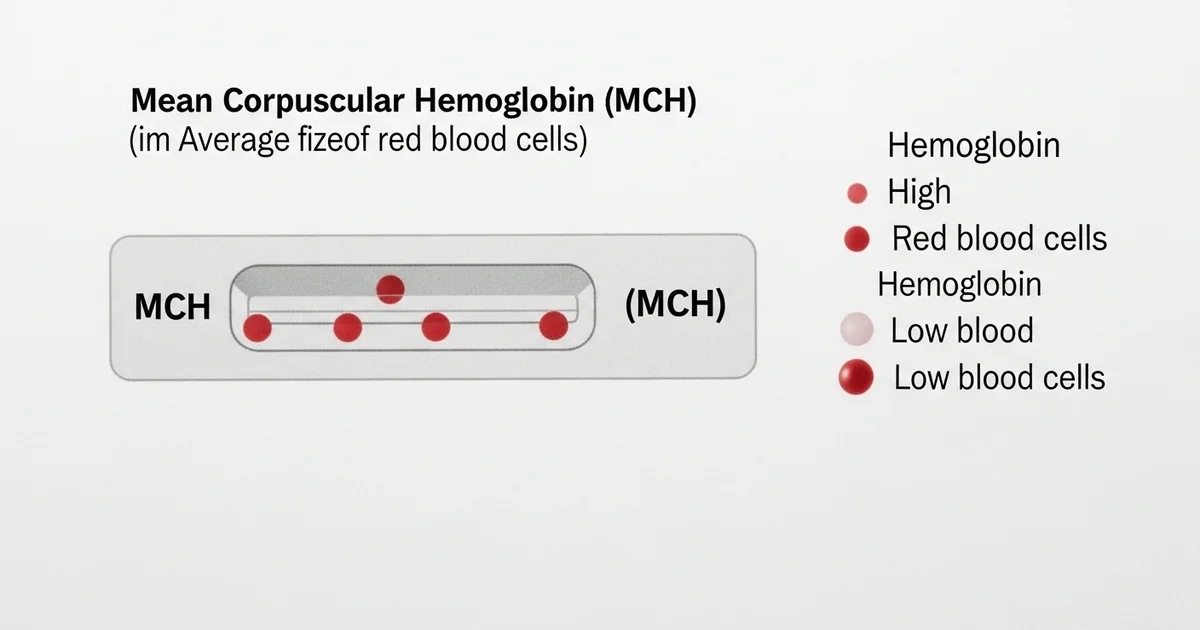
Direct answer: The Mean Corpuscular Hemoglobin (MCH) blood test measures the average amount of hemoglobin in each of your red blood cells. Hemoglobin is the protein that carries oxygen from your lungs to the rest of your body. An MCH test is part of a standard Complete Blood Count (CBC) and helps doctors diagnose different types of anemia. Abnormal MCH levels, either high or low, indicate potential issues with red blood cell size, shape, or function, affecting oxygen delivery.
TL;DR The Mean Corpuscular Hemoglobin (MCH) test is a standard part of a complete blood count (CBC) that measures the average amount of oxygen-carrying hemoglobin in each red blood cell. Think of it as a quality check on your body's oxygen delivery system. While it's just one piece of the puzzle, abnormal MCH levels can be an early indicator of various types of anemia or other underlying health conditions that affect how your body produces or maintains healthy red blood cells.
- MCH measures the average weight of hemoglobin per red blood cell, which is crucial for transporting oxygen throughout your body.
- It is not a standalone test; doctors interpret MCH results alongside other CBC values like MCV (cell size) and MCHC (hemoglobin concentration).
- Low MCH levels often suggest microcytic anemia, where red blood cells are smaller than normal, commonly caused by iron deficiency.
- High MCH levels can indicate macrocytic anemia, where red blood cells are larger than normal, often linked to vitamin B12 or folate deficiencies.
- Your MCH value helps your doctor narrow down the potential causes of anemia, guiding further diagnostic tests and treatment plans.
- Lifestyle factors, diet, and underlying medical conditions can all influence your MCH levels, making it a valuable biomarker for overall health.
Want the full explanation? Keep reading ↓
MCH Blood Test: What It Tells You About Oxygen
Your body's ability to transport oxygen is fundamental to your energy, cognitive function, and overall health. This vital task is performed by red blood cells, which are filled with a protein called hemoglobin. The Mean Corpuscular Hemoglobin (MCH) blood test provides a crucial piece of information about this system by measuring the average amount of hemoglobin in each of your red blood cells.
Think of your red blood cells as tiny cargo ships and hemoglobin as the oxygen they carry. The MCH value tells you, on average, how much cargo is loaded onto each ship. This measurement is a standard part of a Complete Blood Count (CBC), a routine panel that gives your doctor a comprehensive look at the cells circulating in your blood.
Understanding your MCH level helps your healthcare provider assess the efficiency of your body's oxygen delivery service. An abnormal MCH is often one of the first clues pointing toward specific types of anemia or other underlying conditions that can impact your vitality and well-being.
Is Your MCH in the Normal Range?
The first step in understanding your MCH result is to compare it to the established reference range. While these ranges can vary slightly between laboratories, they provide a reliable benchmark for what is considered normal. MCH is measured in picograms (pg) per cell.
A result within the normal range typically indicates that your red blood cells contain a healthy amount of hemoglobin. This is referred to as normochromic.
MCH Reference Ranges
| Population | Normal Range | Units | Notes |
|---|---|---|---|
| Adults | 27 - 33 | pg | Minor variations exist between labs. |
| Newborns (0-2 weeks) | 31 - 37 | pg | Levels are naturally higher at birth and decrease over the first few months. |
| Infants (2-6 months) | 26 - 34 | pg | Levels stabilize as the infant's own blood production takes over. |
| Children (1-12 years) | 25 - 33 | pg | The adult range is typically reached during adolescence. |
Important Note: Always compare your results to the specific reference range provided on your lab report. Your healthcare provider is the best resource for interpreting your individual results.
Concerned About Low MCH? Understanding Hypochromia
A low MCH value means your red blood cells contain less hemoglobin than normal, a condition known as hypochromia. The prefix "hypo-" means low, and "chromia" refers to color. Because hemoglobin is a red pigment, cells with low MCH are visibly paler under a microscope.
When each red blood cell carries less hemoglobin, the overall oxygen-carrying capacity of your blood can decrease. This oxygen deficit can lead to a variety of symptoms that signal your body isn't getting the fuel it needs.
Common Symptoms Associated with Low MCH:
- Persistent fatigue and lack of energy
- Shortness of breath, especially with exertion
- Pale skin (pallor), particularly noticeable in the nail beds and inner eyelids
- Dizziness or lightheadedness
- Cold hands and feet
- Headaches
What Causes Low MCH? The Link to Iron Deficiency
The most common reason for low MCH is a problem with hemoglobin production itself. Since iron is the central, essential building block of the hemoglobin molecule, any issue with iron supply or utilization directly impacts MCH levels.
Primary Causes of Low MCH (Hypochromic Anemia):
- Iron Deficiency Anemia: This is the leading cause worldwide. It occurs when your body's iron stores are depleted, either from inadequate dietary intake, poor absorption (e.g., celiac disease), or blood loss (e.g., heavy menstruation, gastrointestinal bleeding). Without enough iron, the bone marrow cannot produce sufficient hemoglobin to fill new red blood cells.
- Thalassemias: These are a group of genetic disorders that disrupt the production of one of the globin chains that make up the hemoglobin protein. This inherited defect results in smaller cells (low MCV) with less hemoglobin (low MCH).
- Anemia of Chronic Disease/Inflammation: Conditions like rheumatoid arthritis, chronic kidney disease, or persistent infections can cause systemic inflammation. This inflammation can interfere with the body's ability to use its stored iron, leading to a functional iron deficiency and low MCH.
- Sideroblastic Anemia: A rare condition where the body has adequate iron but is unable to properly incorporate it into the hemoglobin molecule. This results in iron accumulating in the red blood cell precursors in the bone marrow.
- Lead Poisoning: Lead toxicity can interfere with several enzymes involved in hemoglobin synthesis, leading to a low MCH.
What to Do About a Low MCH Result
A low MCH is a diagnostic clue, not a final diagnosis. It is essential to work with your healthcare provider to identify and treat the root cause.
Actionable Steps:
- Consult Your Provider: Discuss your MCH result and any symptoms you are experiencing. Your MCH value must be interpreted alongside other CBC indices like MCV (cell size) and RDW (variation in cell size).
- Undergo Further Testing: Your doctor will likely order follow-up tests to pinpoint the cause.
- Iron Panel: Includes ferritin (iron stores), serum iron, and total iron-binding capacity (TIBC).
- Hemoglobin Electrophoresis: Used to diagnose thalassemias or other hemoglobinopathies.
- Vitamin Levels: To rule out other contributing deficiencies.
- Inflammatory Markers: Such as C-reactive protein (CRP), if chronic disease is suspected.
- Address the Underlying Cause: Treatment is targeted at the specific diagnosis.
- For iron deficiency, this may involve oral iron supplements or, in severe cases, intravenous iron infusions.
- For thalassemia, management is complex and may range from observation to regular blood transfusions, depending on severity.
- For anemia of chronic disease, managing the underlying inflammatory condition is the primary goal.
Is Your MCH Too High? Exploring Macrocytosis
A high MCH value indicates that your red blood cells are, on average, carrying more hemoglobin than normal. This typically occurs because the red blood cells themselves are larger than normal, a condition called macrocytosis.
While it might seem that having more hemoglobin per cell is a good thing, it is often a sign of an underlying problem with red blood cell development. These oversized cells are often fragile, inefficient, and have a shorter lifespan, which can lead to a form of anemia known as macrocytic anemia. The term hyperchromic is sometimes used but is often considered a misnomer, as a cell has a physical limit to its hemoglobin concentration (MCHC). The high MCH is almost always due to increased cell volume (high MCV).
Common Symptoms Associated with High MCH:
- Fatigue and weakness
- Shortness of breath
- Neurological symptoms (specific to B12 deficiency): tingling or numbness in hands/feet, balance problems, memory issues
- Sore tongue or mouth ulcers
- Jaundice (a slight yellowing of the skin or eyes) due to the breakdown of fragile red blood cells
What Causes High MCH? Uncovering Vitamin Deficiencies
The most frequent causes of a high MCH are linked to issues with DNA synthesis during the formation of new red blood cells in the bone marrow. When this process is impaired, cell division stalls, but the cell continues to grow in size, resulting in large, hemoglobin-rich (but dysfunctional) cells.
Primary Causes of High MCH (Macrocytic Anemia):
- Vitamin B12 Deficiency: Vitamin B12 is critical for DNA synthesis. A deficiency can be caused by inadequate dietary intake (common in strict vegans), or more often, by poor absorption. Pernicious anemia is an autoimmune condition where the body cannot produce a protein needed to absorb B12 from the gut.
- Folate (Vitamin B9) Deficiency: Folate is also essential for DNA production. Causes include poor diet, certain medications (like methotrexate), increased demand (as in pregnancy), and excessive alcohol consumption.
- Excessive Alcohol Consumption: Alcohol is directly toxic to the bone marrow and can interfere with folate metabolism, leading to macrocytosis even without a true folate deficiency.
- Liver Disease: The liver plays a role in lipid metabolism, which affects the red blood cell membrane. Chronic liver disease can lead to the formation of large, abnormal red blood cells.
- Hypothyroidism: An underactive thyroid gland can slow down metabolic processes throughout the body, including red blood cell production, sometimes resulting in macrocytosis.
- Myelodysplastic Syndromes (MDS): These are a group of bone marrow disorders where the marrow fails to produce enough healthy blood cells, often producing large, abnormal ones instead.
Steps to Take for a High MCH Result
A high MCH, especially when accompanied by a high MCV, requires prompt medical evaluation to determine the cause and prevent potential complications, particularly the irreversible neurological damage associated with severe B12 deficiency.
Actionable Steps:
- Schedule a Doctor's Appointment: This is the most critical step. Do not attempt to self-diagnose or self-treat with supplements.
- Prepare for Follow-Up Tests: Your provider will order specific tests based on your clinical picture.
- Serum Vitamin B12 and Folate Levels: To directly measure for deficiencies.
- Liver Function Tests (LFTs): To assess liver health.
- Thyroid-Stimulating Hormone (TSH): To check for hypothyroidism.
- Peripheral Blood Smear: A microscopic examination of your blood to look for abnormally shaped cells.
- Follow the Treatment Plan:
- For B12 deficiency, treatment often involves high-dose oral supplements or, for absorption issues, regular B12 injections.
- For folate deficiency, oral folic acid supplements are typically prescribed.
- If alcohol, liver disease, or hypothyroidism is the cause, managing that primary condition is the key to normalizing your MCH.
MCH in Context: Why It's Part of a Bigger Picture
It is crucial to understand that the MCH value is never interpreted in isolation. It is one component of the red blood cell indices, which also include Mean Corpuscular Volume (MCV) and Mean Corpuscular Hemoglobin Concentration (MCHC). Together, they provide a detailed profile of your red blood cells.
| CBC Index | What It Measures | How It Helps with MCH |
|---|---|---|
| MCH | Average amount of hemoglobin per red blood cell (weight). | Identifies if cells are low in hemoglobin (hypochromic) or appear to have a high amount (macrocytic). |
| MCV | Average size or volume of a red blood cell. | Crucial Context: A low MCH with a low MCV points to iron deficiency or thalassemia. A high MCH with a high MCV points to B12/folate deficiency. |
| MCHC | Average concentration of hemoglobin in a given volume of red blood cells. | Differentiates true "paleness" (low MCHC) from issues of cell size. In most high MCH cases, MCHC is normal. |
| RDW | Variation in the size of your red blood cells. | A high RDW means there is a wide variety of cell sizes (e.g., in early iron deficiency). |
By analyzing these indices together, your healthcare provider can classify different types of anemia and narrow down the potential causes, leading to a more efficient and accurate diagnosis. An MCH result is the start of an investigation, not the end.
Frequently Asked Questions
What is the most common cause of abnormal Mean Corpuscular Hemoglobin (MCH) levels?
The most common cause of a low MCH is iron deficiency anemia. This condition arises when the body lacks sufficient iron to produce adequate hemoglobin for its red blood cells. The most common cause of a high MCH is macrocytic anemia, which is most frequently driven by a deficiency in either Vitamin B12 or Folate (B9). These vitamins are essential for the proper division and maturation of red blood cells.
How often should I get my Mean Corpuscular Hemoglobin (MCH) tested?
For a healthy individual with no symptoms, MCH is typically checked as part of a routine Complete Blood Count (CBC) during a yearly physical or wellness exam. If you have a known condition that affects red blood cells (like anemia), are undergoing treatment that can impact blood counts, or are experiencing symptoms like persistent fatigue or shortness of breath, your doctor may recommend more frequent testing to monitor your status and response to therapy.
Can lifestyle changes improve my Mean Corpuscular Hemoglobin (MCH) levels?
Yes, in many cases, lifestyle changes can significantly impact MCH levels, particularly when the cause is nutritional.
- For Low MCH (due to iron deficiency): Incorporating iron-rich foods into your diet can help. This includes red meat, poultry, and fish (heme iron), as well as lentils, beans, spinach, and fortified cereals (non-heme iron). Consuming these with a source of Vitamin C, like orange juice, can enhance absorption.
- For High MCH (due to B12/Folate deficiency): Increasing your intake of foods rich in these vitamins is beneficial. Good sources of folate include leafy green vegetables, citrus fruits, and beans. Vitamin B12 is found almost exclusively in animal products like meat, fish, eggs, and dairy. Vegans may need to rely on fortified foods or supplements. It is critical to consult with a healthcare provider before starting any supplement regimen, as treating the wrong condition or taking incorrect dosages can be ineffective or harmful.
Medical Disclaimer
This article is for educational purposes only. Always consult a healthcare professional.