Worried About a High Platelet Count? Let's Break It Down
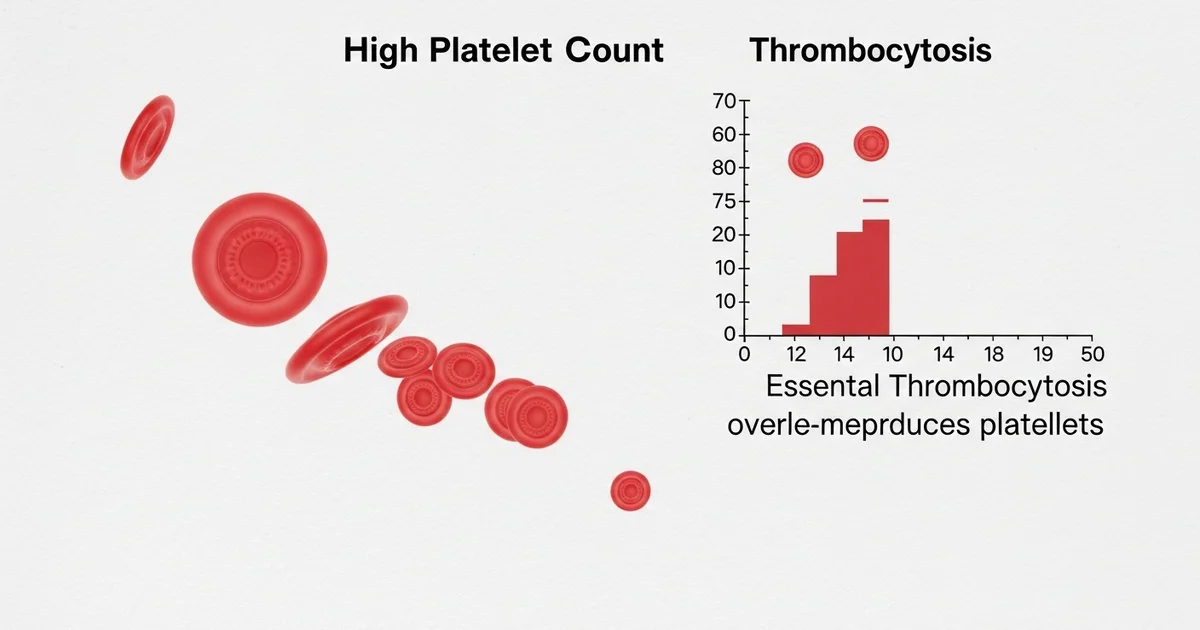
Direct answer: A high platelet count, or thrombocytosis, means you have more platelets than normal, which can increase your risk of blood clots. This condition can be temporary (reactive), caused by infection, inflammation, or iron deficiency. It can also be a primary disorder where your bone marrow produces too many platelets. While often asymptomatic, it can lead to serious complications like stroke or heart attack. A doctor can determine the underlying cause and recommend appropriate management or treatment.
TL;DR A high platelet count, known medically as thrombocytosis, indicates an excess of platelets in your blood. These tiny cells are crucial for clotting, but too many can lead to the formation of unwanted and dangerous blood clots. Understanding the cause is the first step in managing the condition, which can range from a temporary reaction to an underlying disease.
What It Is: Thrombocytosis is a condition where your platelet count exceeds 450,000 platelets per microliter of blood. This is typically discovered during a routine complete blood count (CBC).
Two Main Types: It's categorized as either reactive (secondary) or essential (primary). Reactive thrombocytosis is more common and is a response to another medical issue like an infection, inflammation, or iron deficiency.
Primary Cause: Essential thrombocythemia is a rarer blood disorder where faulty bone marrow cells produce too many platelets without a known external trigger.
Key Symptoms: Many people have no symptoms. When they do occur, they can include headache, dizziness, chest pain, or weakness. Some may experience unusual bleeding or clotting.
Major Risks: The primary concern with a persistently high platelet count is an increased risk of blood clots, which can lead to life-threatening events like a stroke, heart attack, or pulmonary embolism.
Diagnosis & Treatment: Diagnosis involves blood tests, including a CBC, and sometimes a bone marrow biopsy to identify the cause. Treatment focuses on addressing the underlying condition for reactive cases or using medication to lower platelet counts and reduce clot risk in essential thrombocythemia.
Want the full explanation? Keep reading ↓
High Platelet Count: Causes and Clotting Risks
A routine blood test revealing a high platelet count can be concerning, but it's a common finding that doesn't always signal a serious problem. Platelets, or thrombocytes, are tiny, disc-shaped cell fragments in your blood that are essential for forming clots to stop bleeding. When your body produces too many of these cells, the condition is called thrombocytosis.
Understanding the cause of your high platelet count is the first step toward managing any potential risks. A high count is typically discovered through a [platelet count test], which is a standard part of a complete blood count (CBC). The results are then compared to established reference ranges to determine if they are elevated.
Platelet Count (PLT) Reference Ranges
Knowing the normal range for platelets is crucial for interpreting your lab results. While specific values can vary slightly between laboratories, the table below provides a generally accepted guide for platelet counts. It's important to discuss your specific results with your healthcare provider.
| Population | Normal Range (per microliter, µL) | Units | Notes |
|---|---|---|---|
| Adults | 150,000 - 450,000 | platelets/µL | Also commonly reported as 150 - 450 x 10⁹/L. |
| Children (1-17 years) | 150,000 - 450,000 | platelets/µL | Ranges are generally similar to adults but can vary. |
| Infants (1 month - 1 year) | 200,000 - 475,000 | platelets/µL | Platelet counts are often higher in infancy. |
| Pregnant Women | 150,000 - 450,000 | platelets/µL | May decrease slightly due to hemodilution (gestational thrombocytopenia). |
Concerned About High Platelets? Understanding Thrombocytosis
A platelet count above 450,000 per microliter of blood is clinically defined as thrombocytosis. While this number sounds alarming, the health implications depend entirely on the underlying cause. To learn more about the terminology, you can explore the differences between [normal platelet ranges, thrombocytopenia vs. thrombocytosis].
There are two main categories of thrombocytosis, each with very different causes and risk profiles:
- Reactive (Secondary) Thrombocytosis: This is the most common type. The high platelet count is a reaction to an underlying medical condition, such as an infection, inflammation, or iron deficiency. The bone marrow itself is healthy but is being stimulated to produce more platelets.
- Essential (Primary) Thrombocythemia (ET): This is a rare, chronic blood disorder where the bone marrow produces too many platelets due to a genetic mutation. ET is considered a myeloproliferative neoplasm (MPN), a type of slow-growing blood cancer.
Is Your Body Reacting? Common Causes of Secondary Thrombocytosis
In over 80% of cases, a high platelet count is reactive. Your body is responding to a trigger, and the platelet count will usually return to normal once the underlying issue is resolved. The platelets produced are typically normal in function, and the risk of clotting is much lower than in essential thrombocythemia.
Infection and Inflammation
Your body's inflammatory response is a major trigger for increased platelet production. Platelets are involved in the immune response and tissue repair.
- Acute Infections: Bacterial or viral infections like pneumonia or sepsis.
- Chronic Inflammatory Diseases: Conditions like rheumatoid arthritis, inflammatory bowel disease (Crohn's disease, ulcerative colitis), and sarcoidosis.
- Widespread Inflammation: Can occur after major surgery, trauma, burns, or a heart attack.
Iron Deficiency
Iron deficiency anemia is one of the most frequent causes of a reactive high platelet count, particularly in young women and children. The exact mechanism isn't fully understood, but it's believed that the hormonal signals that stimulate red blood cell production in response to anemia may also inadvertently stimulate platelet production. Correcting the iron deficiency typically normalizes the platelet count.
Bleeding or Tissue Damage
When you experience significant bleeding or tissue injury, your body ramps up platelet production to prepare for clotting and repair.
- Acute Blood Loss: From trauma or surgery.
- Major Surgery: The body's response to surgical stress and tissue repair can elevate platelet levels for several weeks.
Spleen Removal (Splenectomy)
The spleen plays a key role in your circulatory system by storing up to one-third of your body's platelets and removing old ones from circulation. If the spleen is removed (splenectomy) or is not functioning correctly (asplenia), these platelets remain in the bloodstream, leading to a persistently high count.
Certain Cancers
Some solid tumors, such as lung, gastrointestinal, breast, or ovarian cancers, can produce inflammatory substances that stimulate the bone marrow to make more platelets. In these cases, the thrombocytosis is a reaction to the cancer, not a blood cancer itself.
Is It Your Bone Marrow? Exploring Essential Thrombocythemia (ET)
If reactive causes have been ruled out, your doctor will investigate the possibility of essential thrombocythemia (ET). This is a much rarer condition where the bone marrow's platelet-producing cells (megakaryocytes) grow and multiply uncontrollably.
Unlike the normal platelets in reactive thrombocytosis, the platelets in ET can be dysfunctional, increasing the risk of both clotting and bleeding. This condition is caused by acquired genetic mutations within the bone marrow stem cells.
Key features of Essential Thrombocythemia include:
- Genetic Mutations: Over 90% of people with ET have a mutation in one of three genes: JAK2 (most common,
60%), CALR (25%), or MPL (~5%). - Myeloproliferative Neoplasm (MPN): ET is part of a group of diseases where the bone marrow overproduces blood cells.
- Higher Clotting Risk: The primary danger of ET is an increased risk of blood clots in arteries and veins.
- Chronic Condition: ET is a long-term disease that requires ongoing monitoring and management by a hematologist.
What Are the Risks? Symptoms of a High Platelet Count
Many people with thrombocytosis, especially the reactive type, have no symptoms at all. The condition is often discovered incidentally on a routine blood test. When symptoms do occur, they are usually related to small blood vessel blockages or, paradoxically, bleeding.
Symptoms Associated with High Platelets
- Headache and Dizziness: Can be caused by small clots affecting blood flow in the brain.
- Numbness or Tingling: Often felt in the hands and feet (paresthesia).
- Vision Changes: Temporary blurred vision or blind spots.
- Chest Pain: Can be a sign of reduced blood flow to the heart.
- Erythromelalgia: A characteristic symptom of ET, causing burning pain, redness, and warmth in the hands and feet.
- Weakness and Fatigue: A general symptom common to many blood disorders.
The Dangers of Blood Clots (Thrombosis)
The most serious risk associated with a high platelet count, particularly in essential thrombocythemia, is thrombosis, or the formation of abnormal blood clots.
| Type of Clot | Location | Potential Complications |
|---|---|---|
| Arterial Thrombosis | Arteries (vessels carrying blood from the heart) | Heart Attack: Clot in a coronary artery. Stroke: Clot in an artery supplying the brain. Transient Ischemic Attack (TIA): A "mini-stroke" caused by a temporary clot. |
| Venous Thrombosis | Veins (vessels carrying blood to the heart) | Deep Vein Thrombosis (DVT): A clot in a deep vein, usually in the leg. Pulmonary Embolism (PE): A life-threatening condition where a piece of a DVT breaks off and travels to the lungs. |
The Paradox of Bleeding
It seems counterintuitive, but an extremely high platelet count (typically over 1,000,000 to 1,500,000 per microliter) can lead to an increased risk of bleeding. This is very different from the issues seen with a [low platelet count, which can cause bruising, bleeding, and requires specific treatment].
This paradoxical effect occurs because the massive number of platelets can absorb a protein called von Willebrand factor from the blood. This protein is essential for helping platelets stick together to form a clot. When it's depleted, the blood's clotting ability is impaired, leading to symptoms like nosebleeds, easy bruising, or gastrointestinal bleeding.
Your Test Results Are High. What Happens Next?
If your CBC shows thrombocytosis, your doctor will initiate a systematic workup to determine the cause. This process is essential for guiding the right treatment plan.
Diagnostic Workup for High Platelets
- Confirm the Result: The first step is often to repeat the CBC to ensure the high count wasn't a lab error.
- Peripheral Blood Smear: A specialist examines a drop of your blood under a microscope. This helps assess the size, shape, and appearance of your platelets and other blood cells, which can provide clues to the cause.
- Investigate Reactive Causes: Your doctor will take a thorough medical history and order tests to look for common secondary causes.
- Inflammatory Markers: C-reactive protein (CRP) and erythrocyte sedimentation rate (ESR).
- Iron Studies: Serum ferritin, iron, and total iron-binding capacity (TIBC) to check for iron deficiency.
- Infection Screening: Based on your symptoms and history.
- Investigate Primary Causes (if needed): If reactive causes are ruled out, the focus shifts to essential thrombocythemia.
- Genetic Testing: Blood tests for the JAK2, CALR, and MPL mutations are performed.
- Bone Marrow Biopsy: This is the definitive test. A small sample of bone marrow is taken (usually from the hip bone) and examined to assess the number and appearance of megakaryocytes and rule out other bone marrow disorders.
Finding a Solution: How Is a High Platelet Count Treated?
Treatment for thrombocytosis is entirely dependent on the cause and your individual risk of complications.
Treating Reactive Thrombocytosis
For reactive thrombocytosis, the focus is always on treating the underlying condition.
- If caused by iron deficiency: Iron supplementation will resolve the anemia and, in turn, normalize the platelet count.
- If caused by an infection: Antibiotics or other appropriate treatments will lower the inflammation and platelet levels.
- If caused by a chronic inflammatory disease: Managing the primary condition (e.g., rheumatoid arthritis) will help control the platelet count.
In reactive thrombocytosis, medications to lower the platelet count are almost never needed, as the condition itself carries a very low risk of clotting.
Managing Essential Thrombocythemia (ET)
The goal of ET treatment is to reduce the risk of blood clots and bleeding. Your hematologist will develop a personalized plan based on your age, platelet count, genetic mutation, and history of thrombosis.
- Low-Dose Aspirin: Most patients are prescribed low-dose aspirin to make platelets less "sticky" and reduce the risk of arterial clots.
- Cytoreductive Therapy (Platelet-Lowering Medications): These may be prescribed for high-risk patients (e.g., those over 60, with a history of clots, or a very high platelet count).
- Hydroxyurea: An oral chemotherapy drug that is the most common first-line treatment.
- Anagrelide: A medication that specifically interferes with platelet maturation.
- Interferon-alfa: Often used in younger patients or women of childbearing age.
- Lifestyle and Risk Factor Management: Controlling cardiovascular risk factors is critical. This includes managing blood pressure, cholesterol, and diabetes, as well as quitting smoking.
Frequently Asked Questions
What is the most common cause of abnormal Platelet Count (PLT) levels?
The most common cause of an abnormal platelet count is a reactive process. For high platelets (thrombocytosis), this is usually due to an underlying condition like an infection, inflammation, or iron deficiency. For low platelets (thrombocytopenia), it is often caused by viral infections, autoimmune conditions, or medications. Primary bone marrow disorders are a much less frequent cause.
How often should I get my Platelet Count (PLT) tested?
For a healthy individual with no symptoms, a platelet count is typically checked as part of a routine physical with a complete blood count (CBC), which may be every few years. If you have a known condition that affects platelets, such as liver disease or an autoimmune disorder, or if you are undergoing treatment for thrombocytosis or thrombocytopenia, your doctor will recommend a more frequent testing schedule, which could range from weekly to every few months.
Can lifestyle changes improve my Platelet Count (PLT) levels?
Lifestyle changes can have an indirect but significant impact, especially for reactive thrombocytosis. If your high platelet count is due to iron deficiency, eating an iron-rich diet and taking supplements can correct it. Managing chronic inflammatory conditions through diet, exercise, and stress reduction may help lower inflammation and, consequently, your platelet count. For essential thrombocythemia, while lifestyle changes won't cure the condition, quitting smoking and maintaining a healthy weight, blood pressure, and cholesterol level are critical for reducing your overall risk of blood clots.
Medical Disclaimer
This article is for educational purposes only. Always consult a healthcare professional.