Worried About Bruising and Bleeding? Understanding Your Platelet Count
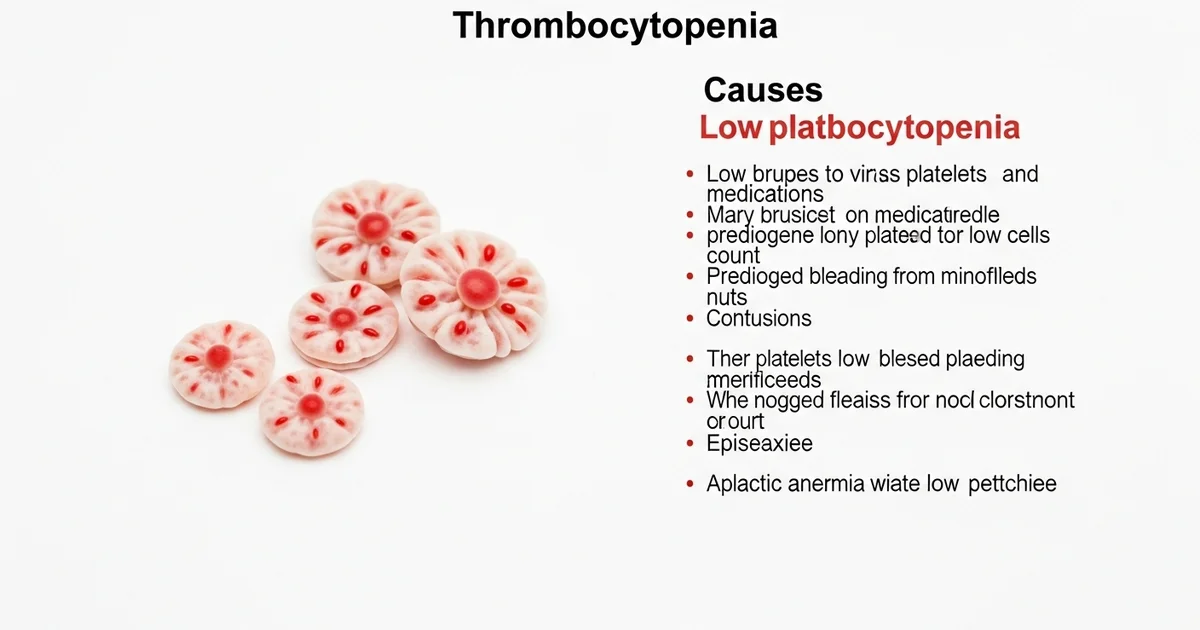
Direct answer: A low platelet count, or thrombocytopenia, means you have fewer platelets in your blood than normal. Platelets are tiny cells that help your blood clot to stop bleeding. When your count is low, you may experience easy bruising, prolonged bleeding from minor cuts, nosebleeds, or tiny red spots on your skin (petechiae). Causes range from viral infections and medications to more serious autoimmune diseases or bone marrow problems. Treatment depends on the underlying cause and severity of your condition.
TL;DR A low platelet count (thrombocytopenia) occurs when your blood doesn't have enough platelets, which are essential for clotting. This condition can lead to symptoms like easy bruising and excessive bleeding. It's diagnosed through a simple blood test called a complete blood count (CBC). While sometimes mild and temporary, a low platelet count can also signal a more serious underlying medical issue that requires diagnosis and treatment by a healthcare professional.
- What it is: A condition where the number of platelets in your blood is below the normal range (typically 150,000 to 450,000 platelets per microliter).
- Key Symptoms: Frequent or easy bruising, prolonged bleeding from cuts, spontaneous nosebleeds or bleeding gums, and small red or purple dots on the skin called petechiae.
- Common Causes: A low count can result from decreased production in the bone marrow, increased destruction of platelets in the bloodstream, or platelets getting trapped in the spleen. This can be triggered by viruses, medications, autoimmune disorders, pregnancy, or chronic liver disease.
- How it's Diagnosed: A healthcare provider will order a complete blood count (CBC) to measure your platelet level. Further tests may be needed to identify the specific cause.
- Treatment Varies: For mild cases, no treatment may be necessary. For more severe cases, treatment focuses on the underlying cause and may include medications like steroids, blood or platelet transfusions, or in some cases, surgery to remove the spleen (splenectomy).
Want the full explanation? Keep reading ↓
Noticing More Bruises? Understanding Low Platelet Count (Thrombocytopenia)
Finding unexplained bruises or noticing that a small cut won't stop bleeding can be alarming. These symptoms often point toward an issue with your blood's ability to clot, a process heavily reliant on tiny cell fragments called platelets. A low platelet count, known medically as thrombocytopenia, is a common finding that can explain this increased tendency for bruising and bleeding.
Thrombocytopenia occurs when the concentration of platelets in your blood drops below the normal threshold. This is typically identified through a routine blood test called a complete blood count (CBC). Understanding what causes a low count and what it means for your health is the first step toward managing the condition effectively.
The severity can range from a mild, temporary dip that causes no symptoms to a severe deficiency that poses a significant risk of spontaneous bleeding. A healthcare provider can interpret your results from a [platelet count test, which is essential for measuring your blood's clotting ability], and determine the underlying cause and appropriate next steps.
What is a Normal Platelet Count? Reference Ranges Explained
To understand what a "low" platelet count is, it's crucial to know the established normal ranges. While these values can vary slightly between laboratories and populations, they provide a critical benchmark for diagnosis. Your lab report will indicate if your levels fall outside this expected range.
It's important to remember that a single reading below the normal range doesn't always signal a serious problem, especially if it's only slightly low. Your doctor will consider your overall health, symptoms, and the trend of your platelet counts over time. The following table outlines the typical reference ranges for platelets.
| Population | Normal Platelet Range | Units | Notes |
|---|---|---|---|
| Adults (Men & Women) | 150 - 450 | x10⁹/L | Varies slightly by laboratory and individual factors. |
| Pregnant Women | 100 - 400 | x10⁹/L | Can be lower due to hemodilution (gestational thrombocytopenia). |
| Newborns (Term) | 150 - 300 | x10⁹/L | Can be lower in premature infants. |
| Children & Adolescents | 150 - 450 | x10⁹/L | Generally similar to adults. |
A count below 150 x10⁹/L (or 150,000 platelets per microliter) is generally classified as thrombocytopenia. Knowing the [normal platelet range is key to distinguishing between thrombocytopenia vs. thrombocytosis], which is an abnormally high platelet count.
Understanding the Severity of a Low Platelet Count
Healthcare providers often categorize thrombocytopenia by severity, as this helps guide monitoring and treatment decisions. The risk of bleeding increases as the platelet count drops.
- Mild Thrombocytopenia (100 - 149 x10⁹/L): Often causes no symptoms and may be discovered incidentally. The risk of spontaneous bleeding is very low.
- Moderate Thrombocytopenia (50 - 99 x10⁹/L): May cause bruising or prolonged bleeding after an injury. Spontaneous bleeding is still uncommon.
- Severe Thrombocytopenia (<50 x10⁹/L): The risk of bleeding increases significantly. Spontaneous bruising and petechiae are common.
- Very Severe Thrombocytopenia (<10 x10⁹/L): Carries a high risk of spontaneous, life-threatening internal bleeding, such as in the brain or gastrointestinal tract. This is a medical emergency.
Worried About Symptoms? Signs of a Low Platelet Count
The signs of a low platelet count are directly related to their function in forming blood clots. When platelet numbers are insufficient, the body's initial defense against bleeding is weakened. Symptoms are not always present, especially in mild cases, but become more apparent as the count drops.
Easy Bruising and Skin Bleeding
This is often the first and most noticeable sign. Because there aren't enough platelets to plug tiny, everyday leaks in small blood vessels, blood can seep into the skin.
- Petechiae: These are pinpoint-sized (1-2 mm) red or purple dots that look like a rash but are non-blanching (they don't fade when you press on them). They are most common on the lower legs but can appear anywhere.
- Purpura: This refers to larger purple, red, or brown spots under the skin, essentially groups of petechiae or larger bruises.
- Ecchymosis: This is the medical term for a common bruise. With thrombocytopenia, you may notice large bruises from minor bumps or find them without any known injury.
Persistent or Spontaneous Bleeding
As the platelet count falls further, more significant bleeding may occur.
- Nosebleeds (Epistaxis): Frequent or heavy nosebleeds that are difficult to stop.
- Bleeding Gums: Noticeable bleeding after brushing or flossing, or even spontaneously.
- Prolonged Bleeding from Cuts: Minor injuries that seem to ooze or bleed for an unusually long time.
- Blood in Urine (Hematuria) or Stool (Melena/Hematochezia): Urine may appear pink or red. Stool may look black and tarry (from digested blood) or contain bright red blood.
- Heavy Menstrual Bleeding (Menorrhagia): Women may experience periods that are significantly heavier or longer than their usual pattern.
Severe and Internal Bleeding Symptoms
In cases of very severe thrombocytopenia, the risk of internal bleeding is a major concern and requires immediate medical attention.
- Severe Headaches or Neurological Changes: These could signal bleeding in the brain (intracranial hemorrhage) and include symptoms like confusion, vision changes, or dizziness.
- Jaundice: Yellowing of the skin and eyes can occur if bleeding affects the liver or causes rapid red blood cell breakdown.
- Enlarged Spleen (Splenomegaly): You might feel fullness in your upper left abdomen. The spleen can become enlarged if it is trapping and destroying too many platelets.
Uncovering the Cause: Why Is My Platelet Count Low?
A low platelet count isn't a disease in itself but rather a sign of an underlying medical issue. A doctor's investigation will focus on finding this root cause. The reasons for thrombocytopenia fall into three main categories: decreased production, increased destruction, or sequestration (trapping) of platelets.
1. Your Bone Marrow Isn't Making Enough Platelets
Platelets are produced in the bone marrow from large cells called megakaryocytes. If the bone marrow is damaged or suppressed, it cannot produce an adequate supply.
- Leukemia, Lymphoma, and Other Cancers: Cancers that invade the bone marrow can crowd out healthy platelet-producing cells.
- Aplastic Anemia: A rare, serious condition where the bone marrow stops making enough new blood cells, including platelets.
- Chemotherapy and Radiation Therapy: These cancer treatments are designed to kill rapidly dividing cells, which can include both cancer cells and healthy bone marrow cells.
- Viral Infections: Viruses like HIV, hepatitis C, Epstein-Barr (mono), and parvovirus can suppress bone marrow function.
- Nutritional Deficiencies: Severe deficiencies in vitamin B12 or folate are essential for blood cell production and can lead to low platelet counts.
- Excessive Alcohol Consumption: Chronic heavy drinking is toxic to the bone marrow and can directly impair platelet production.
2. Your Body Is Destroying Platelets Too Quickly
In some conditions, platelets are produced normally but are removed from circulation faster than they can be replaced. This is often due to an autoimmune process where the body's own immune system mistakenly attacks its platelets.
- Immune Thrombocytopenia (ITP): This is one of the most common causes of isolated low platelets. The immune system creates antibodies that attach to platelets, marking them for destruction by the spleen.
- Drug-Induced Thrombocytopenia: Certain medications can trigger an immune reaction against platelets. Common culprits include heparin, quinine, and some antibiotics (like sulfonamides and vancomycin).
- Autoimmune Diseases: Conditions like lupus and rheumatoid arthritis can be associated with immune-mediated platelet destruction.
- Infections: Severe bacterial infections in the blood (sepsis) can lead to rapid consumption of platelets.
- Thrombotic Thrombocytopenic Purpura (TTP) and Hemolytic Uremic Syndrome (HUS): These are rare but life-threatening disorders that cause small clots to form throughout the body, using up a large number of platelets.
3. Your Spleen Is Trapping Too Many Platelets
The spleen acts as a filter for the blood. Normally, it holds about one-third of the body's platelets in reserve. If the spleen becomes enlarged (splenomegaly), it can trap an excessive number of platelets, reducing the amount in circulation.
- Advanced Liver Disease (Cirrhosis): Cirrhosis, often caused by chronic hepatitis or alcohol abuse, can lead to increased pressure in the veins leading to the spleen, causing it to enlarge and trap more platelets.
- Myelofibrosis: A type of bone marrow cancer that can cause extreme enlargement of the spleen.
Getting a Diagnosis: What Tests to Expect
If your doctor suspects a low platelet count based on your symptoms or a routine CBC, they will order further tests to confirm the diagnosis and identify the cause.
Your Path to a Diagnosis May Include:
- Medical History and Physical Exam: Your doctor will ask about your symptoms, medications, diet, alcohol use, and family history. They will also perform a physical exam to look for signs of bleeding, bruising, or an enlarged spleen.
- Complete Blood Count (CBC): This is the primary test. It will confirm the low platelet count and also provide information about your red and white blood cells, which can offer clues to the underlying cause.
- Peripheral Blood Smear: A drop of your blood is examined under a microscope. This allows a pathologist to visually inspect the platelets' size and appearance and to rule out "pseudothrombocytopenia," a lab artifact where platelets clump together and are miscounted by automated machines.
- Additional Blood Tests: Depending on the suspected cause, your doctor may order tests for:
- Liver and kidney function
- Vitamin B12 and folate levels
- Viral infections (HIV, hepatitis C)
- Autoimmune markers (e.g., ANA for lupus)
- Bone Marrow Aspiration and Biopsy: If the cause is not clear, your doctor may recommend this procedure. A small sample of bone marrow is taken (usually from the back of the hip bone) and examined to see if it is producing platelets correctly. This is crucial for diagnosing conditions like aplastic anemia or leukemia.
Finding a Solution: How Is Low Platelet Count Treated?
Treatment for thrombocytopenia depends entirely on its cause and severity. Mild cases may not require any treatment at all, just careful monitoring. For more significant cases, the goal is to address the underlying condition and raise the platelet count to a safe level to prevent bleeding.
Treating the Underlying Cause
The most effective long-term strategy is to manage the root problem.
- Switching Medications: If a drug is the culprit, stopping or changing the medication will usually resolve the issue.
- Treating Infections: Addressing the underlying viral or bacterial infection can allow the platelet count to recover.
- Managing Autoimmune Disease: Controlling conditions like lupus or ITP with appropriate medications can normalize platelet levels.
- Addressing Nutritional Deficiencies: Supplementing with vitamin B12 or folate can correct the low count if a deficiency is the cause.
- Reducing Alcohol Intake: For alcohol-related thrombocytopenia, cessation is the primary treatment.
Specific Treatments to Increase Platelet Counts
When the platelet count is dangerously low or if there is active bleeding, direct interventions may be needed.
- Corticosteroids (e.g., Prednisone): These are often the first-line treatment for immune-mediated destruction (like ITP). They work by suppressing the immune system to reduce platelet destruction.
- Intravenous Immunoglobulin (IVIG): This is a infusion of antibodies that can temporarily block the receptors in the spleen that destroy platelets, providing a rapid but short-lived increase in the platelet count.
- Thrombopoietin (TPO) Receptor Agonists: These newer medications (e.g., romiplostim, eltrombopag) stimulate the bone marrow to produce more platelets. They are often used for chronic ITP that doesn't respond to other treatments.
- Platelet Transfusions: This involves transfusing platelets from a donor directly into your bloodstream. This is a temporary fix used to control or prevent severe bleeding, as transfused platelets only last for a few days.
- Splenectomy (Spleen Removal): In severe, chronic cases of ITP where the spleen is the primary site of platelet destruction, removing the spleen can be a highly effective, long-term solution. However, it increases the lifelong risk of certain infections.
Frequently Asked Questions
What is the most common cause of abnormal Platelet Count (PLT) levels?
The causes of abnormal platelet counts are diverse. For low platelet counts (thrombocytopenia), common causes include viral infections (which temporarily suppress bone marrow), drug-induced effects (from medications like heparin or chemotherapy), and autoimmune conditions like Immune Thrombocytopenia (ITP). In older adults or those with other health issues, advanced liver disease and bone marrow disorders become more frequent causes.
How often should I get my Platelet Count (PLT) tested?
For a healthy individual with no symptoms, a platelet count is typically checked as part of a routine complete blood count (CBC) during a physical, which may be every few years. If you have a diagnosed condition causing thrombocytopenia, your doctor will establish a monitoring schedule. This could range from daily in a hospital setting for severe cases to every 3-6 months for stable, chronic, mild thrombocytopenia.
Can lifestyle changes improve my Platelet Count (PLT) levels?
Yes, in specific situations. If your low platelet count is caused by a nutritional deficiency, increasing your intake of vitamin B12 and folate through diet or supplements can correct it. If it's caused by excessive alcohol consumption, stopping alcohol is the most critical lifestyle change. For other causes, like autoimmune disease or bone marrow failure, lifestyle changes are supportive but are not a primary treatment; however, eating a balanced diet and avoiding activities that risk injury are important for overall health and safety.
Medical Disclaimer
This article is for educational purposes only. Always consult a healthcare professional.