Understanding Your Platelet Count: When to Be Concerned
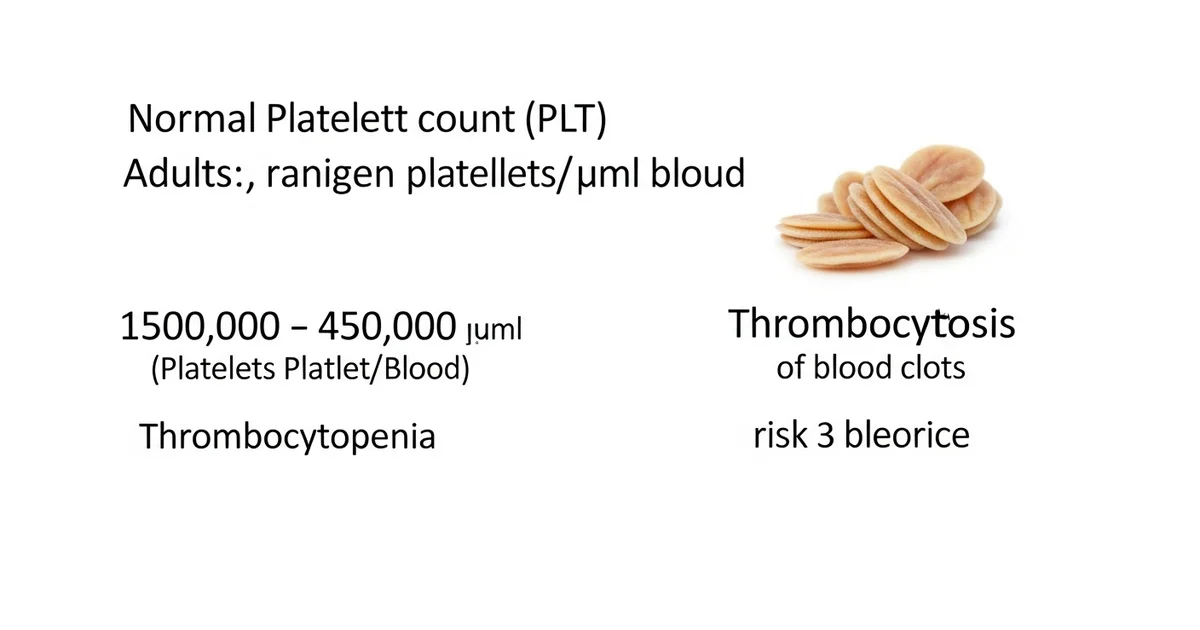
Direct answer: A normal platelet count (PLT) for adults typically ranges from 150,000 to 450,000 platelets per microliter of blood. A count below this range is called thrombocytopenia, which increases bleeding risk. A count above this range is known as thrombocytosis, which raises the risk of blood clots. Both conditions can signal underlying health issues and often require medical evaluation to determine the cause and appropriate management. Your doctor will interpret your results within the context of your overall health.
TL;DR Your platelet count, or PLT, is a key part of a complete blood count (CBC) that measures the tiny cells responsible for blood clotting. A normal range is crucial for health, as levels that are too low (thrombocytopenia) or too high (thrombocytosis) can indicate a medical problem. Understanding what these conditions mean is the first step toward addressing them with your healthcare provider.
- Normal Range: A healthy adult platelet count is between 150,000 and 450,000 platelets per microliter of blood.
- Thrombocytopenia (Low Platelets): A count below 150,000. This condition can lead to easy bruising, prolonged bleeding from cuts, bleeding gums, and tiny red spots on the skin (petechiae). It can be caused by infections, certain medications, autoimmune diseases, or bone marrow problems.
- Thrombocytosis (High Platelets): A count above 450,000. While often asymptomatic, it can increase the risk of dangerous blood clots, potentially leading to stroke or heart attack. Symptoms might include headache, dizziness, or chest pain.
- Causes Vary Widely: Abnormal platelet counts can be temporary or chronic. They can result from underlying conditions like iron deficiency, cancer, infection, inflammation, or genetic factors.
- Diagnosis and Treatment: A doctor diagnoses these conditions through a CBC test and may order further tests to find the cause. Treatment is not always necessary but, when needed, focuses on managing the underlying condition and preventing complications like bleeding or clotting.
Want the full explanation? Keep reading ↓
Normal Platelet Range: Thrombocytopenia vs Thrombocytosis
Platelets, also known as thrombocytes, are tiny, disc-shaped cell fragments in your blood that play a monumental role in your body's ability to heal. When you get a cut, platelets rush to the scene, clumping together to form a plug that stops the bleeding—a process called hemostasis. A platelet count is a standard part of a Complete Blood Count (CBC) and provides a crucial snapshot of your blood's clotting potential.
Understanding your results is vital, as deviations from the normal range can signal a wide array of medical conditions. A low count, known as thrombocytopenia, can lead to a risk of uncontrolled bleeding. Conversely, a high count, called thrombocytosis, can increase the risk of dangerous blood clots.
This article provides a comprehensive guide to interpreting your platelet count, exploring the causes and symptoms of both high and low levels, and explaining what steps you and your healthcare provider might take next.
What is the Normal Range for Platelets?
The standard reference range for platelets is a general guideline, and specific values can vary slightly based on the laboratory, the equipment used, and the population being tested. Your lab report will always include the specific reference range used for your test.
A typical platelet count falls between 150,000 and 450,000 platelets per microliter (µL) of blood for most healthy adults. However, what is considered "normal" can be influenced by factors like age and biological sex.
Platelet Count (PLT) Reference Ranges
| Population | Normal Range | Units | Notes |
|---|---|---|---|
| Adults | 150,000 - 450,000 | platelets/µL | Varies slightly by lab. Some sources may use a lower end of 140,000. |
| Pregnant Women | 100,000 - 350,000 | platelets/µL | Levels often decrease, especially in the third trimester (gestational thrombocytopenia). |
| Newborns (Full-Term) | 150,000 - 400,000 | platelets/µL | Levels can be variable in the first few days of life. |
| Children | 150,000 - 450,000 | platelets/µL | Generally similar to adults but can fluctuate with age and illness. |
Important Note: These ranges are for informational purposes. Always discuss your specific results with the healthcare provider who ordered the test.
Is Your Platelet Count Too Low? Understanding Thrombocytopenia
Thrombocytopenia is the medical term for a platelet count below the established normal range, typically less than 150,000 platelets/µL. When your count is low, your blood cannot clot effectively, which puts you at a higher risk for bleeding.
The severity of thrombocytopenia is often categorized by the platelet count:
- Mild: 100,000 to 149,000/µL
- Moderate: 50,000 to 99,000/µL
- Severe: Less than 50,000/µL
While mild cases may not cause any symptoms, moderate to severe thrombocytopenia requires careful medical evaluation and management.
Noticing Easy Bruising or Bleeding? Signs of Low Platelets
The symptoms of thrombocytopenia are directly related to impaired blood clotting. You may not notice any issues until your count is significantly low.
Common signs and symptoms include:
- Petechiae: Pinpoint-sized, reddish-purple spots on the skin, often on the lower legs. These are tiny hemorrhages under the skin.
- Purpura: Larger patches of purple, blue, or blackish bruising without a known injury.
- Easy or Excessive Bruising (Ecchymosis): Finding large bruises from minor bumps.
- Prolonged Bleeding: From minor cuts or scrapes that take a long time to stop.
- Spontaneous Bleeding: Frequent or severe nosebleeds (epistaxis) or bleeding from the gums, especially after brushing your teeth.
- Heavy Menstrual Flow (Menorrhagia): In women, periods that are significantly heavier or longer than usual.
- Blood in Stool or Urine: Stools may appear black and tarry (melena) or have bright red blood (hematochezia). Urine may look pink or red (hematuria).
- Fatigue: While not a direct symptom of low platelets, it can be associated with underlying conditions causing thrombocytopenia.
Why Are My Platelets Low? Exploring the Causes of Thrombocytopenia
Low platelet counts occur for one of three primary reasons: the bone marrow isn't making enough platelets, the body is destroying platelets too quickly, or the spleen is holding onto too many of them. A comprehensive [platelet count test measuring blood clotting ability] is the first step in diagnosing the issue.
1. Decreased Platelet Production in the Bone Marrow
The bone marrow is the factory for all blood cells, including platelets. If production is impaired, the count will drop.
- Bone Marrow Diseases: Conditions like aplastic anemia, myelodysplastic syndromes (MDS), and cancers such as leukemia or lymphoma can crowd out or damage the platelet-producing cells.
- Vitamin Deficiencies: A severe deficiency in vitamin B12 or folate is essential for blood cell production and can lead to low platelets.
- Viral Infections: Viruses like HIV, hepatitis C, Epstein-Barr (mono), and parvovirus can suppress bone marrow function.
- Chemotherapy and Radiation: These cancer treatments are designed to kill rapidly dividing cells, which can include the cells in the bone marrow responsible for making platelets.
- Excessive Alcohol Consumption: Heavy, long-term alcohol use is toxic to the bone marrow and can directly suppress platelet production.
- Genetic Conditions: Rare inherited syndromes like Wiskott-Aldrich syndrome or May-Hegglin anomaly can cause chronic thrombocytopenia.
2. Increased Platelet Destruction
In these cases, the bone marrow produces platelets normally, but they are removed from circulation too rapidly.
- Autoimmune Disorders: The immune system mistakenly attacks and destroys its own platelets.
- Immune Thrombocytopenia (ITP): A common autoimmune disorder where antibodies target platelets.
- Systemic Lupus Erythematosus (SLE): A chronic autoimmune disease that can affect many parts of the body, including blood cells.
- Drug-Induced Thrombocytopenia: Certain medications can trigger an immune reaction that destroys platelets. Common culprits include heparin, quinine, and some antibiotics (e.g., sulfa drugs).
- Severe Infections (Sepsis): Widespread infection can lead to a condition called Disseminated Intravascular Coagulation (DIC), which uses up platelets at a very high rate.
- Thrombotic Microangiopathies: Rare but life-threatening disorders like Thrombotic Thrombocytopenic Purpura (TTP) and Hemolytic Uremic Syndrome (HUS) cause small clots to form throughout the body, consuming platelets rapidly.
3. Platelet Sequestration
The spleen acts as a filter for the blood. If it becomes enlarged (splenomegaly), it can trap an excessive number of platelets, reducing the amount in circulation.
- Advanced Liver Disease (Cirrhosis): Often caused by chronic hepatitis or alcohol abuse, cirrhosis can cause pressure to back up into the spleen, leading to enlargement.
- Myeloproliferative Neoplasms: Cancers like myelofibrosis can cause significant spleen enlargement.
- Certain Infections: Malaria and mononucleosis can cause temporary splenomegaly.
What Happens When Platelet Counts Are Critically Low?
A platelet count that drops below 20,000/µL is considered critically low and carries a high risk of spontaneous, life-threatening bleeding. The most dangerous complication is an intracranial hemorrhage (bleeding in the brain), which is a medical emergency.
Individuals with severely low platelet counts require immediate medical attention and are often hospitalized for monitoring. Treatment may include:
- Platelet Transfusions: To quickly increase the platelet count and prevent or stop active bleeding.
- Corticosteroids: To suppress the immune system in cases of autoimmune destruction (like ITP).
- Intravenous Immunoglobulin (IVIG): To "distract" the immune system from attacking platelets.
- Treating the Underlying Cause: Addressing the infection, vitamin deficiency, or other root cause is the ultimate goal for long-term management.
Is Your Platelet Count Too High? Investigating Thrombocytosis
Thrombocytosis (sometimes called thrombocythemia) is the medical term for a platelet count above the normal range, typically greater than 450,000 platelets/µL. Having too many platelets can lead to the formation of unnecessary and dangerous blood clots (thrombosis).
These clots can block blood flow in arteries or veins, potentially causing a heart attack, stroke, or pulmonary embolism. There are two main types of thrombocytosis:
- Reactive (Secondary) Thrombocytosis: The most common form, where an underlying medical condition causes the bone marrow to produce excess platelets.
- Essential (Primary) Thrombocythemia (ET): A rare blood cancer where faulty stem cells in the bone marrow produce too many platelets without a known trigger.
Experiencing Headaches or Dizziness? Symptoms of High Platelets
Many people with thrombocytosis, especially the reactive type, have no symptoms at all. The high platelet count is often discovered incidentally on a routine CBC.
When symptoms do occur, they are often related to either small-vessel blockages or, paradoxically, bleeding.
Common symptoms associated with thrombocytosis can include:
- Headache, Dizziness, or Lightheadedness: Caused by small clots affecting blood flow in the brain.
- Chest Pain: Can be a sign of a clot in the heart's arteries (angina or heart attack).
- Numbness or Tingling in the Hands and Feet (Paresthesia): A burning sensation, known as erythromelalgia, is also possible.
- Vision Changes or Weakness: Temporary symptoms that resemble a mini-stroke (transient ischemic attack, or TIA).
- Bleeding: Unusually, a very high platelet count (>1,000,000/µL) can lead to bleeding. This is because the abnormal platelets can interfere with the clotting process. This may manifest as nosebleeds, easy bruising, or gastrointestinal bleeding.
Why Are My Platelets High? Uncovering the Causes of Thrombocytosis
Determining the cause of a high platelet count is crucial, as the management for reactive thrombocytosis is very different from that of essential thrombocythemia. A full medical workup, including a detailed [platelet count test and analysis], is necessary.
1. Reactive (Secondary) Thrombocytosis
This is a temporary or persistent response to another condition. Once the underlying issue is resolved, the platelet count usually returns to normal.
- Iron Deficiency Anemia: This is one of the most common causes of a reactive high platelet count.
- Infection: Acute or chronic infections, particularly bacterial ones, can stimulate platelet production.
- Chronic Inflammation: Conditions like rheumatoid arthritis, inflammatory bowel disease (IBD), and vasculitis can lead to elevated platelets.
- Cancer: Solid tumors (e.g., lung, colon, ovarian cancer) can produce substances that stimulate platelet production.
- Post-Surgery or Trauma: The body's natural healing response to major injury or surgery includes increasing platelet production.
- Splenectomy (Spleen Removal): Without the spleen to store and remove old platelets, the number in circulation will naturally rise.
2. Essential (Primary) Thrombocythemia (ET)
ET is a type of myeloproliferative neoplasm (MPN), a group of blood cancers originating in the bone marrow. In ET, a genetic mutation (most commonly in the JAK2, CALR, or MPL genes) causes the bone marrow to overproduce platelets.
ET is a chronic condition that requires long-term monitoring and management by a hematologist. The primary goal of treatment is to reduce the risk of blood clots or bleeding complications.
How Do You Manage a High Platelet Count?
Treatment for thrombocytosis depends entirely on the cause.
- For Reactive Thrombocytosis: The focus is on treating the underlying condition.
- Actionable Advice: If iron deficiency is the cause, iron supplementation will correct both the anemia and the high platelet count. If it's due to an infection, antibiotics will resolve it. Managing chronic inflammatory diseases can also help normalize platelet levels.
- For Essential Thrombocythemia: Management is tailored to the patient's risk of clotting.
- Low-Dose Aspirin: Often prescribed to all patients (unless contraindicated) to make platelets less "sticky" and reduce the risk of clots.
- Cytoreductive Therapy: For high-risk patients (e.g., over age 60, history of clots), medications like hydroxyurea, anagrelide, or interferon are used to lower the platelet count.
- Lifestyle Modifications: Controlling cardiovascular risk factors like high blood pressure, high cholesterol, diabetes, and smoking is critical to reducing the overall risk of thrombosis.
Frequently Asked Questions
What is the most common cause of abnormal Platelet Count (PLT) levels?
For thrombocytopenia (low platelets), common causes include viral infections, autoimmune disorders like ITP, and medication side effects. For thrombocytosis (high platelets), the most common cause by far is reactive thrombocytosis due to an underlying condition, with iron deficiency anemia and infection being frequent triggers. Essential thrombocythemia, a blood cancer, is a much rarer cause of high platelets.
How often should I get my Platelet Count (PLT) tested?
For a healthy individual with no symptoms, a platelet count is typically checked as part of a routine physical with a Complete Blood Count (CBC), perhaps every 1-3 years. If you have a known medical condition that affects platelets (like liver disease, an autoimmune disorder, or a blood cancer), or if you are taking medications that can lower your count (like chemotherapy), your doctor will order tests much more frequently—ranging from daily to every few months—to monitor your condition.
Can lifestyle changes improve my Platelet Count (PLT) levels?
Yes, in certain situations. For thrombocytopenia, if the cause is a nutritional deficiency, correcting a low vitamin B12 or folate level through diet or supplements will raise your platelet count. Limiting or stopping alcohol consumption can also allow the bone marrow to recover and improve platelet production. For thrombocytosis, if the cause is reactive to iron deficiency, increasing iron intake will normalize the count. For all individuals, especially those with essential thrombocythemia, managing cardiovascular risk factors—like maintaining a healthy weight, exercising, not smoking, and controlling blood pressure and cholesterol—is crucial for reducing the risk of clotting complications.
Medical Disclaimer
This article is for educational purposes only. Always consult a healthcare professional.