Understanding the Exhaustion: What a Low RBC Count Means for You
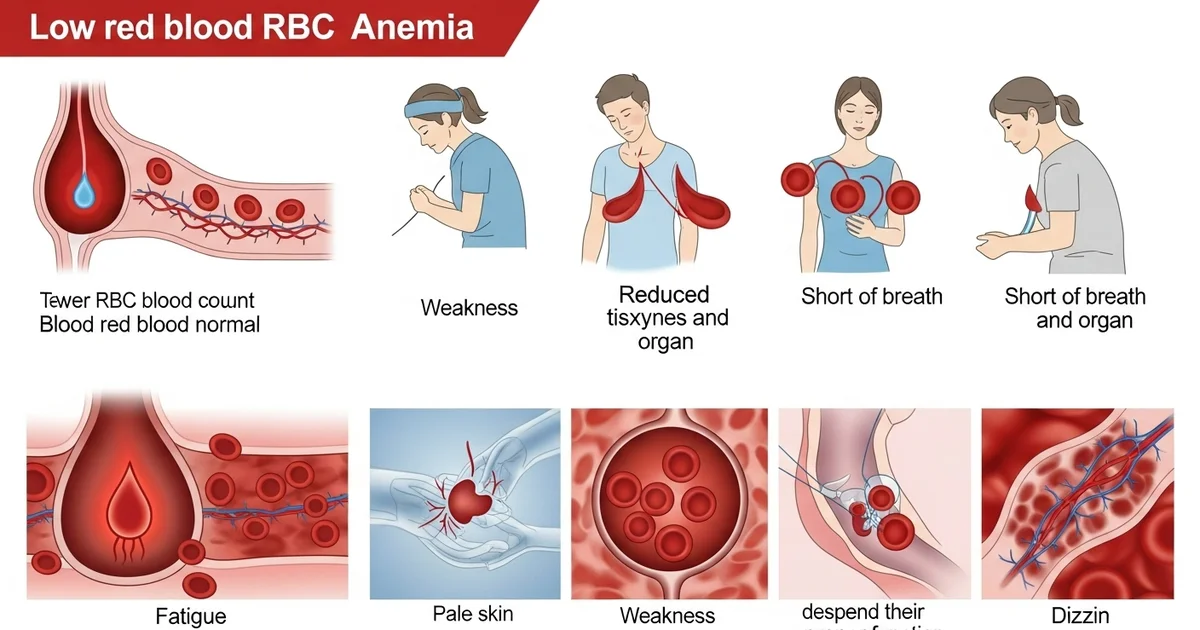
Direct answer: A low red blood cell (RBC) count, a condition often called anemia, means your body has fewer red blood cells than normal. These cells carry oxygen, so a low count can lead to symptoms like fatigue, weakness, pale skin, shortness of breath, and dizziness. This happens because your tissues and organs aren't getting enough oxygen to function properly. A complete blood count (CBC) test is used to diagnose a low RBC count, and treatment depends on the underlying cause.
TL;DR A low red blood cell (RBC) count, medically known as anemia, signifies that your blood has an insufficient number of red blood cells to carry adequate oxygen to your body's tissues. This oxygen deficiency is the root cause of the common symptoms associated with the condition. Understanding these signs is the first step toward seeking a diagnosis and appropriate treatment from a healthcare provider.
- Persistent Fatigue: Feeling unusually tired or weak is the most common symptom. This occurs because your muscles and organs lack the oxygen needed for energy.
- Pale Skin: A noticeable paleness, especially in the face, nail beds, and inside the lower eyelids, can indicate a reduced volume of red blood cells circulating near the skin's surface.
- Shortness of Breath: Your body may struggle to get enough oxygen, causing you to feel breathless, particularly with physical exertion, as your heart and lungs work harder to compensate.
- Dizziness or Lightheadedness: Insufficient oxygen to the brain can lead to feelings of dizziness, lightheadedness, or even fainting spells.
- Cold Hands and Feet: Poor circulation resulting from a low RBC count can cause your extremities to feel cold to the touch.
- Headaches: A lack of oxygen can affect the brain and trigger frequent or persistent headaches.
- Rapid or Irregular Heartbeat: The heart may beat faster to pump more oxygen-rich blood throughout the body, leading to palpitations or an irregular rhythm.
Want the full explanation? Keep reading ↓
Low RBC Count: Symptoms of Anemia Explained
Feeling persistently tired, weak, or short of breath? These common complaints might be more than just the result of a busy lifestyle. They could be signals from your body indicating a low red blood cell (RBC) count, a condition known as anemia.
Your red blood cells are vital workers, responsible for transporting oxygen from your lungs to every tissue and organ. When their numbers fall, your body is starved of the oxygen it needs to function correctly. Understanding the symptoms of anemia is the first step toward identifying the underlying cause and restoring your energy and well-being.
Understanding Your Lab Report: What is a Low RBC Count?
A red blood cell count is a standard part of a Complete Blood Count (CBC), one of the most frequently ordered blood tests. This test measures the number of red blood cells in a specific volume of your blood. A result below the established normal range indicates a low RBC count, or anemia.
Red blood cells contain hemoglobin, an iron-rich protein that binds to oxygen. A low RBC count almost always means you have low hemoglobin and hematocrit levels as well, which compromises your body's entire oxygen delivery system. To learn more about what this specific lab value represents, you can get a detailed overview of what an [RBC count means on your lab report].
Is Your RBC Count Too Low? Checking the Numbers
To determine if your count is low, your results are compared against established reference ranges. These ranges can vary based on age, sex, and even the altitude where you live. It's crucial to interpret your results using the specific range provided by the laboratory that performed the test.
While your lab report will have its own reference values, the table below provides typical ranges for red blood cell counts.
| Population | Normal Range | Units | Notes |
|---|---|---|---|
| Adult Men | 4.5 - 5.9 | million cells/mcL | Tends to be higher than in women. |
| Adult Women (non-pregnant) | 4.1 - 5.1 | million cells/mcL | Lower due to menstrual blood loss. |
| Children (1-6 years) | 4.0 - 5.5 | million cells/mcL | Ranges fluctuate significantly with age. |
| Newborns | 4.8 - 7.1 | million cells/mcL | Naturally very high at birth, then decreases. |
A value below the lower end of the appropriate range suggests anemia. For a more detailed breakdown, it's helpful to understand the [normal RBC count ranges for adults and kids], as these values change throughout life.
Feeling Tired and Weak? The Classic Symptoms of Anemia
When your body's tissues don't get enough oxygen, a wide range of symptoms can appear. The severity often depends on how low your RBC count is and how quickly the anemia developed.
Common and Early Warning Signs
These are often the first symptoms people notice. Because they are so common, they are frequently dismissed as stress or lack of sleep.
- Persistent Fatigue: This is the hallmark symptom of anemia. It's a profound sense of exhaustion that isn't relieved by rest.
- Generalized Weakness: You may feel a lack of physical strength, making daily tasks feel difficult.
- Pale Skin (Pallor): A noticeable paleness, especially in the face, inner eyelids, nail beds, and gums, is a classic sign. This is due to reduced hemoglobin near the skin's surface.
Symptoms Affecting Your Heart and Lungs
Your cardiovascular and respiratory systems work harder to compensate for the lack of oxygen, leading to distinct symptoms.
- Shortness of Breath (Dyspnea): You might feel winded after minimal physical exertion, like climbing a single flight of stairs or walking a short distance.
- Rapid or Irregular Heartbeat (Palpitations): You may feel your heart pounding, fluttering, or beating too fast as it tries to pump more oxygen-deprived blood throughout the body.
- Dizziness or Lightheadedness: Insufficient oxygen to the brain can cause you to feel faint, especially when standing up too quickly.
- Chest Pain: In severe cases, the heart muscle itself can become starved for oxygen, leading to angina (chest pain).
Neurological and Cognitive Symptoms
Your brain is a high-demand organ for oxygen, and a deficit can quickly impact its function.
- Headaches: A common but often overlooked symptom of anemia.
- Difficulty Concentrating or "Brain Fog": You may find it hard to focus, remember things, or think clearly.
- Cold Hands and Feet: Reduced blood flow and oxygen can lead to a persistent feeling of cold in your extremities.
Less Common but Significant Signs
Some symptoms are linked to specific types of anemia, particularly chronic iron deficiency.
- Pica: An unusual craving to eat non-food items such as ice, dirt, clay, or paper.
- Brittle Nails: Nails may become fragile, chip easily, or develop a spoon-like shape (koilonychia).
- Sore or Swollen Tongue (Glossitis): Your tongue may appear smooth, shiny, and inflamed.
- Cracks at the Corners of the Mouth (Angular Cheilitis): Painful inflammation and cracking at the sides of your mouth.
Why is My RBC Count Low? Exploring the Root Causes of Anemia
A low RBC count is a symptom, not a disease itself. Your healthcare provider's goal is to find the root cause. The reasons for anemia generally fall into three main categories.
1. Problems with RBC Production
Your red blood cells are produced in your bone marrow. Any disruption to this "factory" can lead to a low count.
- Nutritional Deficiencies: This is the most common reason for poor RBC production.
- Iron-Deficiency Anemia: Iron is a core component of hemoglobin. Insufficient intake, poor absorption, or chronic blood loss can deplete iron stores.
- Vitamin B12 Deficiency: Vitamin B12 is essential for RBC maturation. This can be caused by a vegan diet (without supplementation) or absorption problems (pernicious anemia).
- Folate (Vitamin B9) Deficiency: Folate is also critical for DNA synthesis in developing red blood cells.
- Bone Marrow and Stem Cell Problems:
- Aplastic Anemia: A rare, serious condition where the bone marrow fails to produce enough of all three types of blood cells (red, white, and platelets).
- Myelodysplastic Syndromes (MDS): A group of cancers where immature blood cells in the bone marrow do not mature into healthy cells.
- Leukemia and other Cancers: Cancers of the blood and bone marrow can crowd out and suppress normal red blood cell production.
- Anemia of Chronic Disease or Inflammation:
- Conditions like chronic kidney disease, rheumatoid arthritis, Crohn's disease, and HIV/AIDS can interfere with the hormones and processes that signal RBC production. In kidney disease, the body doesn't produce enough erythropoietin (EPO), the hormone that stimulates the bone marrow.
2. Increased RBC Destruction (Hemolysis)
Sometimes, red blood cells are destroyed faster than the bone marrow can replace them. This process is called hemolysis.
- Inherited Conditions:
- Sickle Cell Anemia: A genetic disorder causing red blood cells to form an abnormal crescent or "sickle" shape, leading to their premature destruction and blockage of blood vessels.
- Thalassemia: A genetic disorder that results in the body making an abnormal form or inadequate amount of hemoglobin.
- Acquired Conditions:
- Autoimmune Hemolytic Anemia: The immune system mistakenly identifies red blood cells as foreign and attacks them.
- Mechanical Damage: Physical trauma to red blood cells, which can occur with artificial heart valves, severe burns, or certain infections.
3. Significant Blood Loss
Losing blood means losing red blood cells. The cause can be obvious or hidden.
- Acute Blood Loss: Rapid blood loss from trauma, surgery, or childbirth.
- Chronic Blood Loss: Slow, long-term bleeding is a very common cause of anemia, especially iron-deficiency anemia.
- Gastrointestinal (GI) Bleeding: Ulcers, polyps, colon cancer, or long-term use of NSAIDs (like ibuprofen) can cause slow, hidden bleeding in the digestive tract.
- Heavy Menstrual Periods (Menorrhagia): A frequent cause of iron-deficiency anemia in premenopausal women.
Worried About the Opposite Problem? Understanding High RBC Counts
While this article focuses on the symptoms of a low RBC count, it's important to know that a high count also carries health risks. A high red blood cell count, known as erythrocytosis, means your blood is thicker than normal. This can increase the risk of blood clots, heart attack, and stroke. If you're concerned about a result on the other end of the spectrum, learning about the [causes and risks of a high RBC count] is essential for a complete picture of your health.
What Happens After a Low RBC Result? Next Steps and Diagnosis
A low RBC count on a CBC is a critical clue, but it's just the beginning of the diagnostic process. Your doctor will use this result, along with other CBC indices, to narrow down the potential causes.
Key CBC Parameters Your Doctor Will Examine:
- Hemoglobin (Hgb) and Hematocrit (Hct): Measure the oxygen-carrying capacity and volume of red blood cells.
- Mean Corpuscular Volume (MCV): Measures the average size of your red blood cells. A low MCV suggests small cells (microcytic anemia), often seen in iron deficiency. A high MCV suggests large cells (macrocytic anemia), common in B12 or folate deficiency.
- Red Cell Distribution Width (RDW): Measures the variation in the size of your red blood cells.
Based on these initial findings, your doctor may order follow-up tests to confirm a diagnosis:
- Iron Panel: Includes ferritin, serum iron, and total iron-binding capacity (TIBC) to diagnose iron-deficiency anemia.
- Vitamin B12 and Folate Levels: Directly measures the levels of these crucial vitamins in your blood.
- Reticulocyte Count: Measures the number of young, immature red blood cells to see if your bone marrow is responding properly.
- Peripheral Blood Smear: A microscopic examination of your blood to look at the shape, size, and color of your blood cells for clues (e.g., sickle-shaped cells).
- Further Investigations: If the cause is still unclear, you may need an endoscopy or colonoscopy to look for GI bleeding, or a bone marrow biopsy to directly examine the source of blood cell production.
Managing a low RBC count starts with treating the underlying cause. This could be as simple as taking iron or vitamin supplements, or it may involve more complex treatments for chronic diseases or bone marrow disorders. Always follow the guidance of your healthcare provider.
Frequently Asked Questions
What is the most common cause of abnormal Red Blood Cell Count (RBC) levels?
The most common cause of a low Red Blood Cell Count (RBC) worldwide is iron-deficiency anemia. This can result from inadequate dietary iron, poor iron absorption, or chronic blood loss (such as from heavy menstruation or gastrointestinal bleeding). For high RBC counts (erythrocytosis), common causes include dehydration (which concentrates the blood), smoking, and living at high altitudes.
How often should I get my Red Blood Cell Count (RBC) tested?
For a healthy individual with no symptoms, an RBC count is typically checked as part of a routine physical exam or wellness check, which may occur every 1-3 years. However, if you have symptoms of anemia, a chronic condition known to affect RBCs (like kidney disease), or are undergoing treatment for anemia, your doctor will recommend more frequent testing. This could be every few weeks or months to monitor your response to treatment and manage your condition effectively.
Can lifestyle changes improve my Red Blood Cell Count (RBC) levels?
Yes, for certain types of anemia, lifestyle changes can be very effective. If your low RBC count is due to a nutritional deficiency, dietary changes are key. This includes eating iron-rich foods (red meat, beans, spinach), vitamin B12-rich foods (animal products, fortified cereals), and folate-rich foods (leafy greens, lentils). If you have a high RBC count, quitting smoking, ensuring proper hydration, and managing underlying conditions can help lower your levels. Always consult with a healthcare provider before making significant dietary changes or starting supplements.
Medical Disclaimer
This article is for educational purposes only. Always consult a healthcare professional.