Vitamin B12: Benefits, Function, and Daily Dosage
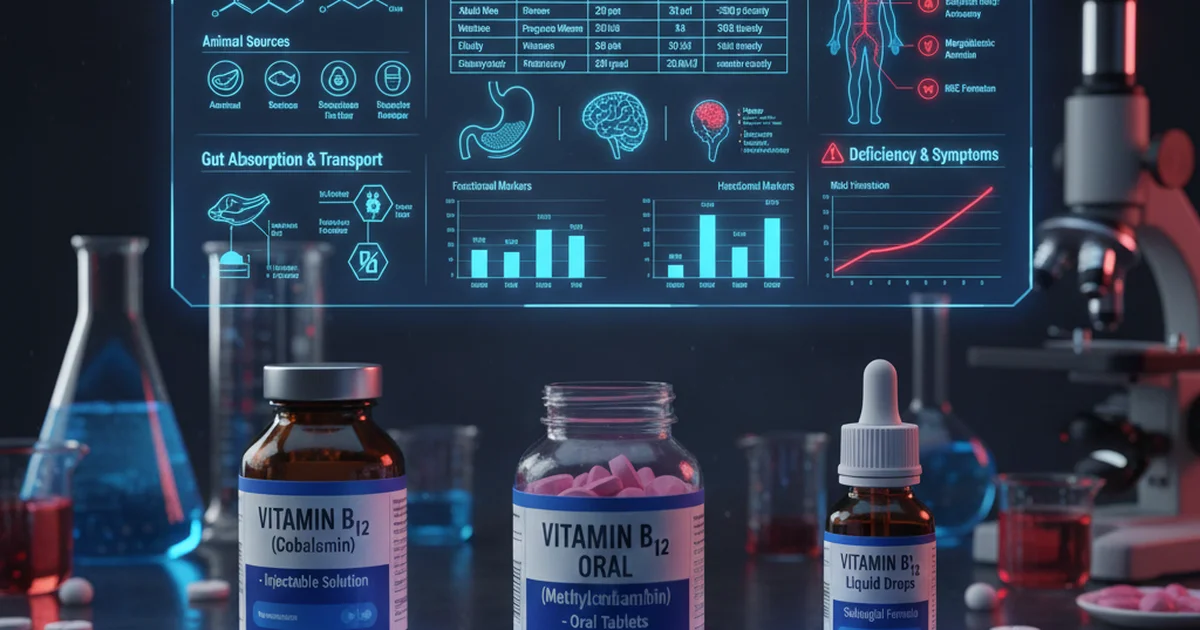
Reference Ranges for Serum Vitamin B12
| Population | Normal Range | Units | Notes |
|---|---|---|---|
| Adult Men (≥19 yr) | 200–900 | pg/mL | Values <200 pg/mL usually indicate deficiency; 200–300 pg/mL is borderline |
| Adult Women (≥19 yr) | 180–850 | pg/mL | Slightly lower upper limit in some labs |
| Pregnant Women | 150–700 | pg/mL | Physiologic dilution; monitor closely |
| Lactating Women | 180–800 | pg/mL | Increased demand for infant |
| Children (1–12 yr) | 250–900 | pg/mL | Age‑dependent; infants have higher requirements |
| Infants (0–12 mo) | 300–1,200 | pg/mL | Breast‑fed infants rely on maternal stores |
| Elderly (≥65 yr) | 200–800 | pg/mL | Absorption often reduced; consider functional markers |
Normal ranges can vary between laboratories; interpretation should consider clinical context and functional biomarkers such as MMA or homocysteine.
Introduction
Vitamin B12 (cobalamin) is a water‑soluble vitamin essential for neurologic integrity, red blood cell formation, and DNA synthesis. Unlike many other vitamins, it is synthesized exclusively by microorganisms; humans obtain it through diet or supplementation. Deficiency can manifest as anemia, neuropathy, cognitive decline, and even irreversible neurologic damage if left untreated. This article explores the biochemical roles of B12, food sources, factors influencing its bioavailability, recommended daily intakes, and practical supplementation strategies.
1. Biological Functions of Vitamin B12
1.1. Co‑enzyme Roles
- Methylcobalamin serves as a co‑enzyme for methionine synthase, converting homocysteine to methionine. This reaction regenerates tetrahydrofolate (THF), linking B12 to folate metabolism and DNA synthesis.
- Adenosylcobalamin is a co‑enzyme for methylmalonyl‑CoA mutase, converting methylmalonyl‑CoA to succinyl‑CoA, a critical step in odd‑chain fatty acid and branched‑amino‑acid catabolism.
1.2. Hematologic Impact
- Adequate B12 enables proper maturation of erythroblasts; deficiency leads to megaloblastic anemia, characterized by enlarged, immature red cells and hypersegmented neutrophils.
1.3. Neurologic Integrity
- Myelin synthesis depends on methylation reactions that require B12. Deficiency can cause peripheral neuropathy, gait disturbances, and cognitive impairment.
1.4. Cardiovascular Health
- By lowering homocysteine, B12 may reduce endothelial dysfunction, a risk factor for atherosclerosis.
2. Dietary Sources and Bioavailability
2.1. Animal‑Based Foods (High Bioavailability)
| Food | Approximate B12 Content (µg/100 g) | Bioavailability |
|---|---|---|
| Clams | 84 | >90 % |
| Liver (beef) | 70 | >80 % |
| Oily fish (salmon, mackerel) | 5–9 | 70–90 % |
| Shellfish (crab, mussels) | 10–15 | 70–90 % |
| Dairy (milk, yogurt, cheese) | 0.4–1.0 | 50–70 % |
| Eggs (especially yolk) | 0.5 | 30–50 % |
Key point: The intrinsic factor (IF) produced in the stomach binds B12 from animal proteins, facilitating absorption in the distal ileum. Most animal foods provide B12 in a form readily recognized by IF.
2.2. Plant‑Based Foods (Low or Non‑existent Bioavailability)
- Fortified cereals, plant milks, and nutritional yeasts often contain added B12, typically as cyanocobalamin. The bioavailability of fortified B12 is comparable to that of natural sources when consumed with adequate gastric acid.
- Algae (e.g., nori, spirulina) sometimes claim B12 content, but much of it is pseudo‑cobalamin, which humans cannot utilize efficiently.
2.3. Factors Influencing Absorption
| Factor | Effect on B12 Absorption |
|---|---|
| Gastric acidity | Low acid (e.g., due to proton‑pump inhibitors) reduces release of B12 from food proteins. |
| Intrinsic factor deficiency (e.g., pernicious anemia) | Blocks ileal uptake; leads to severe deficiency. |
| Ileal disease or resection | Directly impairs B12 transport. |
| Long‑term metformin use | Decreases IF‑B12 complex formation. |
| Alcoholism | Damages gastric mucosa, reducing IF production. |
| Age >65 yr | Decreased acid production and IF synthesis; prevalence of malabsorption rises. |
2.4. Passive Diffusion
At high oral doses (≥500 µg), up to 1 % of B12 can be absorbed via passive diffusion, independent of IF. This pathway underlies the efficacy of high‑dose oral supplements in individuals with IF deficiency.
3. Recommended Daily Intake
| Age Group | Recommended Dietary Allowance (RDA) | Upper Limit (UL) |
|---|---|---|
| Infants 0–6 mo | 0.4 µg | — |
| Infants 7–12 mo | 0.5 µg | — |
| Children 1–3 yr | 0.9 µg | — |
| Children 4–8 yr | 1.2 µg | — |
| Children 9–13 yr | 1.8 µg | — |
| Adolescents 14–18 yr | 2.4 µg | — |
| Adults ≥19 yr | 2.4 µg | — |
| Pregnant women | 2.6 µg | — |
| Lactating women | 2.8 µg | — |
No established UL for B12 because toxicity is rare; excess is excreted in urine.
4. Assessing Vitamin B12 Status
4.1. Laboratory Tests
- Serum B12: Primary screening; values <200 pg/mL suggest deficiency, 200–300 pg/mL is borderline.
- Methylmalonic acid (MMA): Elevated in functional B12 deficiency; more sensitive than serum B12 alone.
- Homocysteine: Increases when B12, folate, or B6 are low; useful when combined with other markers.
4.2. Clinical Indicators
- Macrocytic anemia, glossitis, peripheral neuropathy, memory loss, or unexplained fatigue.
5. Supplementation Strategies
5.1. Who May Need Supplements?
- Vegans and strict vegetarians (no animal products).
- Older adults with reduced gastric acidity.
- Patients with malabsorption (e.g., Crohn’s disease, celiac disease, bariatric surgery).
- Individuals on long‑term metformin or proton‑pump inhibitors.
- Pregnant or lactating vegans (increased fetal and infant needs).
5.2. Forms of Supplemental B12
| Form | Typical Dose | Advantages | Considerations |
|---|---|---|---|
| Cyanocobalamin | 500 µg – 5 mg (oral) | Inexpensive, stable | Requires conversion to active forms; generally safe |
| Methylcobalamin | 500 µg – 5 mg (oral) | Directly active, may support neurologic health | Slightly less stable, higher cost |
| Hydroxocobalamin | 1 mg (intramuscular) | Longer plasma half‑life, used for injections | Requires injection; not suitable for self‑administration |
| Sublingual tablets | 500 µg – 2 mg | Bypasses stomach acid to some extent | Evidence shows similar absorption to oral tablets when dose is adequate |
5.3. Dosage Recommendations
| Situation | Oral Dose | Frequency | Notes |
|---|---|---|---|
| Preventive supplementation for vegans | 250–500 µg | Daily | Choose cyanocobalamin or methylcobalamin |
| Borderline serum B12 (200–300 pg/mL) | 1,000 µg | Daily for 2–4 weeks, then re‑test | High dose utilizes passive diffusion |
| Confirmed deficiency | 1,000–2,000 µg | Daily for 1–2 months, then maintenance 200–500 µg | Re‑assess labs after 2–3 months |
| Severe neurologic involvement | 1,000 µg (intramuscular) | Weekly for 4–6 weeks, then monthly | Intramuscular route bypasses absorption barriers |
| Post‑bariatric surgery | 1,000 µg | Daily | Oral high‑dose effective via passive diffusion |
Critical point: For individuals with intrinsic factor deficiency, intramuscular administration remains the gold standard, but high‑dose oral therapy (≥1,000 µg) can be an effective alternative when adherence to injections is problematic.
5.4. Safety and Interactions
- B12 has a wide safety margin; no known adverse effects at typical supplemental doses.
- Potential interaction: High doses of folic acid can mask hematologic signs of B12 deficiency while allowing neurologic damage to progress; co‑supplementation should be balanced.
- Vitamin B12 and metformin: Continue B12 supplementation; monitor levels every 6–12 months.
6. Practical Dietary Tips
- Include a B12‑rich food at every meal if you consume animal products: a serving of fish, meat, dairy, or eggs.
- For vegans: Choose fortified plant milks, breakfast cereals, or nutritional yeast that list ≥2.4 µg per serving.
- Combine B12‑rich foods with vitamin C‑rich foods to enhance overall nutrient absorption (though B12 absorption is not vitamin C‑dependent, overall meal quality improves health).
- Avoid chronic use of antacids without medical supervision; they can impair B12 release from food.
7. Monitoring and Follow‑Up
- Baseline testing before initiating high‑dose supplementation (serum B12, MMA, homocysteine).
- Re‑evaluate after 8–12 weeks of therapy to confirm biochemical correction and symptom improvement.
- Long‑term maintenance: Once normal levels are achieved, a lower maintenance dose (200–500 µg daily) or continued dietary intake is sufficient for most individuals.
- Special populations (pregnant vegans, bariatric patients) should have annual testing or more frequent monitoring based on clinical judgment.
8. Summary of Actionable Advice
- Assess risk: If you are vegan, over 65 yr, on metformin, or have gastrointestinal disease, consider B12 testing.
- Eat wisely: Incorporate at least one B12‑rich animal product daily, or use fortified plant‑based alternatives.
- Supplement intelligently: Start with 250–500 µg daily for prevention; increase to 1,000 µg or higher for borderline or deficient levels, using oral or injectable forms as appropriate.
- Monitor: Check serum B12 and functional markers after 2–3 months of therapy; adjust dose based on results and symptoms.
- Protect neurologic health: Do not ignore mild deficiencies; early treatment prevents irreversible nerve damage.
Frequently Asked Questions
What is the most common cause of abnormal Vitamin B12 levels?
The leading cause of low B12 is malabsorption, most often due to intrinsic factor deficiency (pernicious anemia) or age‑related decline in gastric acid that impairs release of B12 from food proteins. In dietary terms, strict vegan or vegetarian diets without adequate fortified foods are also frequent contributors. Elevated B12 levels are less common and may reflect liver disease, certain leukemias, or excessive supplementation.
How often should I get my Vitamin B12 tested?
- General adult population: Every 3–5 years if you have no risk factors.
- At‑risk groups (vegans, seniors, metformin users, bariatric surgery patients, pregnant vegans): Annually or sooner if symptoms develop.
- After initiating supplementation: Re‑test after 8–12 weeks to confirm biochemical response.
Can lifestyle changes improve my Vitamin B12 levels?
Yes. Optimizing diet by including fortified foods or modest animal‑product servings can raise B12 intake. Reducing or managing use of acid‑suppressing medications (under physician guidance) improves gastric release of B12 from foods. Limiting excessive alcohol helps maintain healthy gastric mucosa and intrinsic factor production. Finally, maintaining a healthy gut through balanced fiber intake and probiotic‑rich foods supports overall nutrient absorption, though B12 absorption is primarily IF‑dependent.
Empowering yourself with knowledge about Vitamin B12 ensures you can maintain optimal neurologic function, blood health, and overall vitality throughout life.
Medical Disclaimer
This article is for educational purposes only. Always consult a healthcare professional.