Understanding a 'Left Shift' on Your Blood Test Results
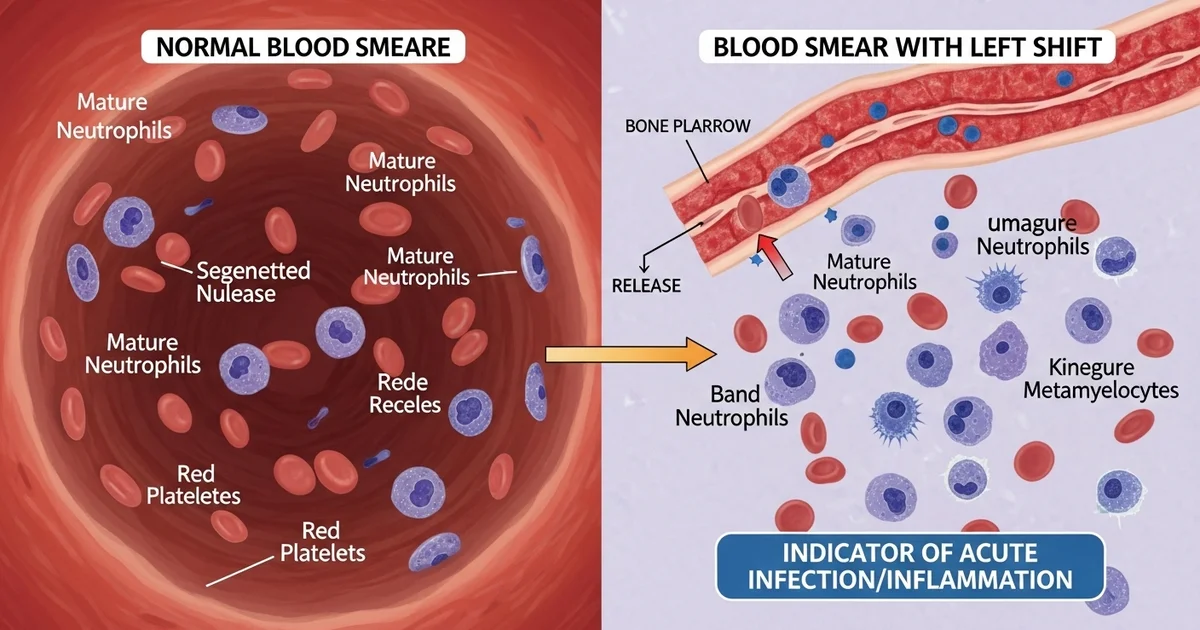
Direct answer: A 'left shift' in neutrophils means your body is releasing immature white blood cells (neutrophils) from the bone marrow into the bloodstream. This is typically a response to a significant infection or inflammation. Essentially, your body is in high-alert mode, sending out young, not-fully-developed cells to fight off a perceived threat. It's a key indicator your doctor uses to assess the severity of an illness, most commonly a bacterial infection.
TL;DR A 'left shift' is a term used to describe a specific finding on a complete blood count (CBC) test. It indicates that there is an increased number of young, immature neutrophils circulating in your blood. Normally, your blood contains mostly mature neutrophils. When the body faces a major stressor, like a severe bacterial infection, it rapidly produces and releases these 'band cells' or immature neutrophils from the bone marrow to fight it off. This surge in young cells is what doctors call a left shift.
- A left shift is your immune system's emergency response, signaling a high demand for infection-fighting white blood cells.
- The most common cause is a significant bacterial infection, such as pneumonia, sepsis, or an abscess.
- Other causes can include severe inflammation, tissue damage from trauma or surgery, certain medications, and in rare cases, bone marrow disorders like leukemia.
- It is not a disease itself but a sign of an underlying condition that requires medical investigation.
- Doctors diagnose a left shift by examining a blood smear under a microscope to count the proportion of immature to mature neutrophils.
- Treatment focuses on resolving the root cause, such as administering antibiotics for a bacterial infection, which will typically normalize neutrophil counts.
Want the full explanation? Keep reading ↓
Noticing Immature Cells on Your Report? Understanding Neutrophil Maturation
A "left shift" is a medical term used to describe a specific finding in your blood test results. It means your bone marrow is releasing immature neutrophils into your bloodstream, which is not a normal, everyday occurrence. This is a crucial signal that your body is mounting a strong response to a significant stressor, most often an infection.
Neutrophils are the most abundant type of white blood cell and your body's first line of defense against pathogens. They are produced in the bone marrow through a complex maturation process called granulopoiesis. This process is like an assembly line, starting with a very immature cell and ending with a fully functional, bacteria-fighting soldier.
Under normal circumstances, only the final, mature product—the segmented neutrophil—and a very small number of nearly mature band neutrophils are released into circulation. A left shift occurs when the demand for neutrophils is so high that the bone marrow is forced to release these younger, less mature cells before they are fully ready.
The Neutrophil Assembly Line: From Precursor to Defender
To understand a left shift, it's helpful to know the key stages of neutrophil development. The presence of cells from "earlier" in this list (like myelocytes) in your blood is what defines a left shift.
| Cell Stage | Normal in Blood? | Seen in Left Shift? | Key Features |
|---|---|---|---|
| Segmented Neutrophil | Yes (Mature) | Yes (Majority) | Nucleus is segmented into 3-5 distinct lobes. |
| Band Neutrophil | Yes (<6% of WBCs) | Yes (Increased) | Nucleus is a continuous, C- or S-shaped band. |
| Metamyelocyte | No | Yes (Moderate Shift) | Nucleus is indented and kidney-bean shaped. |
| Myelocyte | No | Yes (Marked Shift) | Nucleus is round or oval, not indented. |
| Promyelocyte | No | Yes (Severe Shift) | A large cell with a large nucleus and granules. |
| Myeloblast | No | Yes (Very Severe) | The earliest precursor; its presence is a concern. |
Lab Report Shows a "Left Shift"? Decoding the Primary Causes
Finding a left shift on a complete blood count (CBC) with differential is a call to action for your healthcare provider. It indicates that your immune system is working overtime. The most common and significant cause is a bacterial infection.
When bacteria invade, your body's existing neutrophils rush to the site of infection. As these defenders are used up, chemical signals are sent to the bone marrow, demanding massive reinforcements. The bone marrow responds by ramping up production and pushing immature cells out into the circulation to help fight the battle. The primary [role of neutrophils is to engulf and destroy invading bacteria], and a left shift shows this system is in overdrive.
Common infections that cause a left shift include:
- Pneumonia: Infection of the lungs.
- Sepsis: A life-threatening, body-wide response to infection.
- Appendicitis: Inflammation and infection of the appendix.
- Urinary Tract Infections (UTIs): Especially when the infection moves to the kidneys (pyelonephritis).
- Skin Infections: Such as cellulitis or abscesses.
Beyond Infection: Other Reasons for a Left Shift
While bacterial infection is the classic cause, other conditions can also trigger the bone marrow to release immature neutrophils. These are typically situations involving intense inflammation or physiological stress.
Key Non-Infectious Causes:
- Severe Inflammation: Conditions like acute pancreatitis, severe burns, or major trauma can cause a massive inflammatory response that mimics a severe infection, leading to a left shift.
- Tissue Necrosis (Cell Death): When a large area of tissue dies, the body initiates a strong inflammatory cleanup response. This is commonly seen after a heart attack (myocardial infarction) or in crush injuries.
- Medications: Certain drugs directly stimulate the bone marrow.
- Corticosteroids (e.g., prednisone): Can cause the release of neutrophils from the bone marrow.
- G-CSF (Granulocyte Colony-Stimulating Factor): A medication (e.g., filgrastim, Neupogen) given specifically to boost neutrophil production, often in cancer patients.
- Extreme Physiological Stress: Conditions that put the body under immense strain, such as diabetic ketoacidosis (DKA), shock, or major surgery, can trigger a left shift.
- Pregnancy: The third trimester and labor can be associated with a mild left shift and neutrophilia.
Is It a Leukemoid Reaction or Leukemia?
In rare cases, the white blood cell count can be extremely high (e.g., >50,000 cells/µL) with many immature forms, a picture called a leukemoid reaction. This is a severe, but reactive, response to an underlying problem like a severe infection. Once the trigger is treated, the blood counts return to normal.
This must be distinguished from Chronic Myeloid Leukemia (CML), a type of blood cancer. In CML, a genetic mutation causes the bone marrow to produce and release immature granulocytes in an uncontrolled, malignant way. A hematologist uses specific tests, including genetic analysis, to differentiate between these two conditions.
How is a Left Shift Detected and Quantified?
A left shift is not a single number but an observation made during the "differential" part of a CBC. This is where the different types of white blood cells are counted and categorized.
The Manual Differential: A Microscopic Examination
The gold standard for identifying a left shift is a manual differential. A trained medical laboratory scientist smears a drop of your blood on a glass slide, stains it, and examines it under a microscope.
During this process, they:
- Visually identify and count at least 100 white blood cells.
- Categorize each cell by type (neutrophil, lymphocyte, etc.).
- Specifically classify the neutrophils by their maturity (segmented, band, metamyelocyte, etc.).
- Report the percentages of each cell type.
The presence of metamyelocytes, myelocytes, or other precursors confirms a left shift.
Automated Analyzers: Getting a Faster Signal
Modern hematology instruments are highly sophisticated and perform automated differentials. They can quickly count thousands of cells and provide percentages of the main white blood cell types.
Many analyzers also have the technology to flag the presence of immature cells. This is often reported as an Immature Granulocyte (IG) percentage. An elevated IG count is a strong indicator of a left shift and almost always triggers a technologist to perform a manual microscopic review for confirmation and detailed characterization.
Your Neutrophil Count is High: Connecting Left Shift with Neutrophilia
A left shift is often seen alongside neutrophilia, a condition where the overall number of neutrophils is elevated. Learning about the [normal neutrophil range can help you understand the difference between neutropenia vs. neutrophilia] and put your lab results in context. The same underlying cause, like an infection, drives both the total number of neutrophils up and the premature release of immature forms.
Think of it this way:
- Neutrophilia: The army is larger than normal.
- Left Shift: The army is so desperate for soldiers that it's sending new, untrained recruits to the front lines.
The combination of a [high neutrophil count and a left shift is a powerful indicator of infection, stress, or inflammation]. The more pronounced the left shift (i.e., the more immature the cells are), the more severe the underlying condition is likely to be.
What Happens Next? Actionable Steps After a Left Shift is Found
A left shift is not a diagnosis in itself but a critical clue. Your doctor's primary goal will be to identify and treat the underlying cause.
Finding the Source of the Problem
Your physician will use the left shift finding in conjunction with other information to make a diagnosis. Expect the following steps:
- Medical History and Physical Exam: Your doctor will ask about symptoms like fever, cough, pain, or recent injuries. A thorough physical examination will look for signs of infection or inflammation.
- Evaluating Other Lab Results: The CBC provides other clues, such as the total white blood cell count, hemoglobin levels, and platelet count. Other blood tests, like C-reactive protein (CRP) or procalcitonin, can also help confirm an infection.
- Further Diagnostic Testing: Depending on your symptoms, your doctor may order additional tests to pinpoint the cause.
- Chest X-ray: To look for pneumonia.
- Urinalysis: To check for a UTI.
- Blood Cultures: To identify bacteria in the bloodstream (sepsis).
- Imaging (CT scan, Ultrasound): To look for an abscess or other localized source of inflammation.
Monitoring and Treatment
Treatment is entirely dependent on the cause. If a bacterial infection is identified, antibiotics are the primary treatment. For non-infectious inflammation, the focus will be on managing that specific condition (e.g., supportive care for pancreatitis).
Your doctor will likely order follow-up CBCs to monitor your response to treatment. A resolving left shift—where the immature cells disappear from the blood and only mature neutrophils remain—is an excellent sign that the treatment is working and your body is recovering.
Frequently Asked Questions
What is the most common cause of abnormal Neutrophils levels?
The most common cause of abnormal neutrophil levels is the body's response to a bacterial infection. This typically results in neutrophilia (a high neutrophil count) and often a left shift (the presence of immature neutrophils). Other causes of high neutrophils include inflammation, stress, and certain medications, while low neutrophils (neutropenia) can be caused by viral infections, autoimmune diseases, or bone marrow problems.
How often should I get my Neutrophils tested?
Neutrophils are tested as part of a Complete Blood Count (CBC), which is not a routine screening test for healthy individuals without symptoms. Your doctor will order a CBC to investigate symptoms (like fatigue, fever, or bruising), to monitor a chronic condition, or to check for side effects of a medication. If you have an acute illness, your neutrophil count may be checked daily in a hospital setting to monitor your response to treatment.
Can lifestyle changes improve my Neutrophils levels?
For a healthy person, neutrophil levels are regulated by the body and generally do not require specific lifestyle interventions. However, a healthy lifestyle supports a robust immune system. This includes a balanced diet, regular exercise, adequate sleep, and stress management. If your neutrophil count is abnormal due to an underlying condition, the most important "lifestyle" change is adhering to the treatment plan prescribed by your doctor to manage that condition.
Medical Disclaimer
This article is for educational purposes only. Always consult a healthcare professional.