Feeling Worried About Your Blood Work? A Guide to Lymphocytes
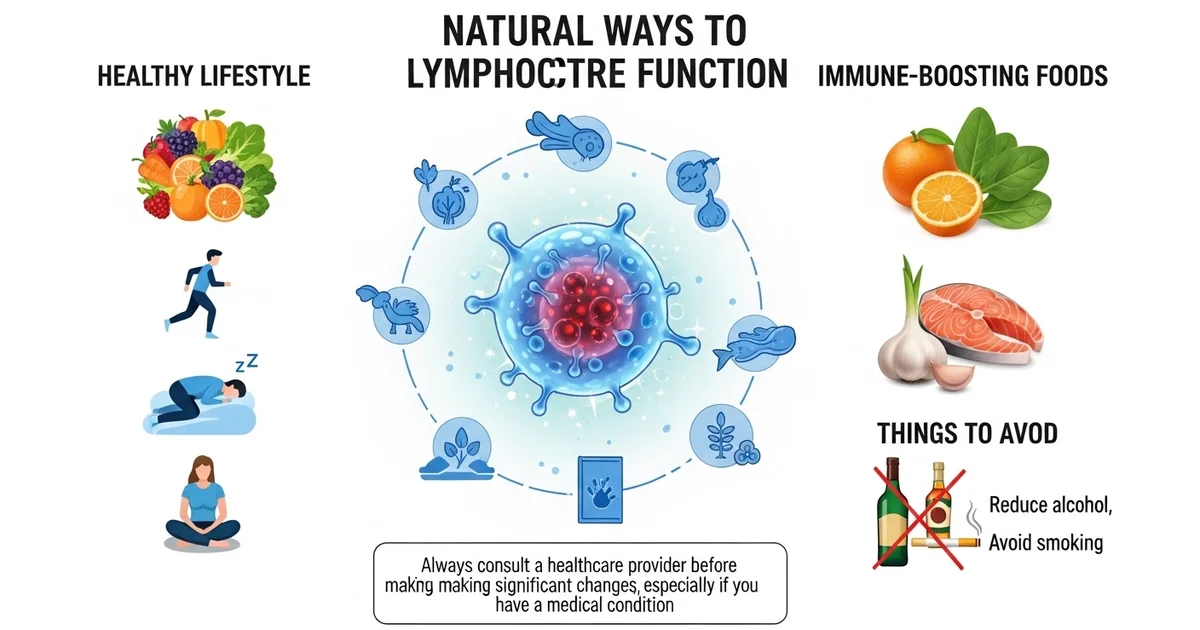
Direct answer: You can improve lymphocyte function naturally by adopting a healthy lifestyle. This includes eating a balanced diet rich in antioxidants, vitamins, and minerals (like zinc and selenium), getting regular moderate exercise, ensuring adequate sleep, and managing stress. Specific foods like citrus fruits, leafy greens, garlic, and fatty fish support immune cells. Reducing alcohol intake and avoiding smoking are also crucial for optimal lymphocyte health. Always consult a healthcare provider before making significant changes, especially if you have a medical condition.
TL;DR Improving the function of your lymphocytes, a key type of white blood cell, is essential for a strong immune system. While medical conditions require a doctor's care, you can support your body's natural defenses through targeted lifestyle and dietary choices. The goal is to create an internal environment where these immune cells can thrive and function optimally, helping protect you from infections and illness.
Eat an Immune-Boosting Diet: Focus on whole foods rich in antioxidants, vitamins, and minerals. Include plenty of colorful fruits and vegetables (like berries, citrus, and leafy greens), lean proteins, and healthy fats. Zinc (found in nuts, seeds, and beans) and selenium (found in Brazil nuts and fish) are particularly important for lymphocyte production and function.
Prioritize Quality Sleep: Aim for 7-9 hours of quality sleep per night. During sleep, your body produces cytokines, a type of protein that targets infection and inflammation, effectively creating an immune response. Chronic sleep deprivation can suppress lymphocyte activity.
Manage Chronic Stress: Long-term stress elevates cortisol levels, a hormone that can suppress the effectiveness of the immune system, including your lymphocytes. Incorporate stress-reduction techniques like meditation, yoga, deep breathing exercises, or spending time in nature.
Engage in Moderate Exercise: Regular, moderate physical activity can boost the circulation of immune cells, helping them detect and fight illnesses more efficiently. Aim for at least 150 minutes of moderate-intensity exercise, like brisk walking or cycling, per week.
Limit Alcohol and Avoid Smoking: Excessive alcohol consumption can impair the function of immune cells and increase susceptibility to infections. Smoking damages the immune system and is a major risk factor for numerous health problems, negatively impacting lymphocyte health.
Want the full explanation? Keep reading ↓
Worried About Your Immune Health? Understanding Your Lymphocytes
Lymphocytes are a type of white blood cell that forms the backbone of your adaptive immune system—the body's highly specialized defense network. When you get a Complete Blood Count (CBC), the lymphocyte value gives you a number, but it doesn't tell the whole story. True immune resilience lies not just in the quantity of these cells, but in their function: their ability to effectively identify, attack, and remember pathogens like viruses and bacteria.
While you can't directly measure lymphocyte "function" with a standard lab test, you can adopt evidence-based lifestyle strategies to support their health and optimize their performance. This article explores natural, sustainable ways to enhance the activity of your immune army, helping your body defend itself more effectively. Understanding the different roles these cells play is a crucial first step; for a deeper dive, you can learn more about the specific jobs of [T-cells, B-cells, and NK cells, the main types of lymphocytes].
A key starting point for understanding your lymphocyte status is the absolute lymphocyte count (ALC) from your blood work. This number provides a snapshot of how many of these cells are circulating in your blood at a given moment.
Lymphocyte Count: A Starting Point for Assessment
While this article focuses on function, knowing your numbers is the first step in any health assessment. A CBC with differential provides your absolute lymphocyte count. While reference ranges can vary slightly between laboratories, the table below provides a general guide.
| Population | Normal Absolute Range | Units | Notes |
|---|---|---|---|
| Adults | 1,000 - 4,800 | cells/µL | µL = microliter |
| Children (1-4 years) | 2,000 - 8,000 | cells/µL | Higher counts are normal in young children |
| Infants (under 1 year) | 3,000 - 9,500 | cells/µL | Counts are highest in infancy and decline with age |
| Older Adults | 1,000 - 3,500 | cells/µL | The range may narrow slightly in the elderly |
It's important to interpret these numbers in context. A result outside the typical range isn't automatically a cause for alarm. For a complete picture, it's essential to understand what constitutes a [normal lymphocyte count and percentage] for your age and health status.
Concerned About Your Immune Resilience? Start with Nutrition
Your lymphocytes are like microscopic soldiers, and they require a steady supply of high-quality fuel to perform their duties. A diet lacking in key vitamins and minerals can directly impair their ability to proliferate, communicate, and eliminate threats. Focusing on a nutrient-dense diet is the single most powerful step you can take to support lymphocyte function.
Micronutrients That Fuel Lymphocyte Activity
Specific vitamins and minerals act as cofactors and building blocks for critical immune processes. Deficiencies in these micronutrients can leave your immune system sluggish and vulnerable.
Zinc: Absolutely essential for the development and function of T-cells. Zinc deficiency can lead to a reduced ability of lymphocytes to respond to pathogens.
- Food Sources: Oysters, red meat, poultry, beans, nuts, and whole grains.
Selenium: A powerful antioxidant that protects lymphocytes from oxidative damage during an immune response. It helps enhance the activity of T-cells and NK cells.
- Food Sources: Brazil nuts (just one or two per day), seafood, organ meats, and grains.
Iron: Crucial for lymphocyte proliferation (rapid multiplication) when your body detects an infection. However, both iron deficiency and iron overload can impair immune function, so balance is key.
- Food Sources: Lean meats, seafood, beans, lentils, spinach, and fortified cereals.
Vitamin D: Often called the "sunshine vitamin," it is a powerful immune modulator. It helps regulate lymphocyte activity, preventing an overactive or underactive response. Many people have suboptimal levels.
- Sources: Sunlight exposure, fatty fish (salmon, mackerel), fortified milk, and egg yolks.
Vitamin C: A well-known antioxidant that supports various cellular functions of the immune system. It promotes the production and function of B-cells and T-cells.
- Food Sources: Citrus fruits, bell peppers, strawberries, broccoli, and kiwi.
Vitamin B6: Plays a vital role in producing new immune cells, including lymphocytes. It is also involved in the production of interleukin-2, a key signaling molecule for T-cells.
- Food Sources: Chickpeas, tuna, salmon, poultry, and potatoes.
Folate (Vitamin B9) and Vitamin B12: Both are critical for DNA synthesis, which is necessary for the rapid division of lymphocytes during an immune response.
- Food Sources: Leafy green vegetables, legumes, and fortified grains (folate); meat, fish, eggs, and dairy (B12).
The Role of Protein and Healthy Fats
Beyond micronutrients, the building blocks of your diet are just as important.
Protein: Lymphocytes and the antibodies they produce are made of protein. Inadequate protein intake can severely hamper your body's ability to mount an effective immune defense. Amino acids like glutamine and arginine are particularly important fuels for immune cells.
- Actionable Tip: Ensure you are consuming adequate high-quality protein from sources like lean meat, fish, eggs, dairy, legumes, and tofu.
Healthy Fats: Omega-3 fatty acids, found in fatty fish, flaxseeds, and walnuts, have anti-inflammatory properties. They help resolve the inflammatory process after an infection is cleared, which is a key part of a healthy immune cycle.
Feeling Stressed and Run Down? How Stress Sabotages Your Lymphocytes
Chronic psychological stress is a well-documented enemy of the immune system. While a brief, acute stressor can temporarily heighten immune alertness, long-term stress has a profound suppressive effect, particularly on lymphocyte function.
Understanding Cortisol's Impact on Immune Cells
When you're chronically stressed, your body produces elevated levels of the hormone cortisol. This hormone is a potent immune suppressant.
- Reduces Lymphocyte Production: Cortisol signals the thymus (the organ where T-cells mature) and bone marrow to slow down the production of new lymphocytes.
- Impairs Function: It directly inhibits the ability of existing T-cells to activate, multiply, and coordinate an attack against pathogens.
- Induces Apoptosis: High cortisol levels can trigger apoptosis, or programmed cell death, in lymphocytes, effectively reducing the size of your immune army.
Interestingly, while chronic stress is suppressive, an acute infection or stressor can sometimes lead to a temporary spike in your lab report. This is one of the many reasons for [high lymphocytes, or lymphocytosis, often linked to viral causes], as the body mobilizes its defenses.
Actionable Steps to Manage Stress for Better Immunity
Managing stress isn't just about feeling better mentally; it's a physiological necessity for a functional immune system.
- Mindfulness and Meditation: Even 10-15 minutes of daily practice can lower cortisol levels and reduce inflammatory markers.
- Deep Breathing Exercises: Techniques like box breathing or diaphragmatic breathing activate the parasympathetic nervous system, which counteracts the "fight or flight" stress response.
- Spending Time in Nature: Research shows that "forest bathing" (shinrin-yoku) can increase the number and activity of NK cells.
- Gentle Movement: Yoga and tai chi combine physical movement with mindfulness, effectively reducing stress and improving immune regulation.
Not Getting Enough Sleep? Why Rest is Critical for Lymphocyte Function
Sleep is a critical period of immune system maintenance and memory consolidation. Skimping on sleep, even for a single night, can significantly impair the effectiveness of your lymphocytes, particularly your T-cells.
The Science of Sleep and Immune Memory
During deep sleep, your body goes to work optimizing your immune defenses.
- T-Cell Redistribution: While you sleep, T-cells are redistributed from the bloodstream into your lymph nodes. This migration enhances their ability to encounter pathogens and form "immunological memory," which is how vaccines and prior infections protect you long-term.
- Enhanced Adhesion: Studies show that sleep improves the ability of T-cells to stick to and attack infected cells. Hormones like adrenaline and noradrenaline, which are high when you're awake, can inhibit this "stickiness."
- Cytokine Production: Sleep promotes the production of pro-inflammatory cytokines that help coordinate a robust immune response, while sleep deprivation skews this balance.
A lack of quality sleep directly translates to weaker T-cell function, making you more susceptible to common infections like the cold or flu.
Practical Tips for Improving Sleep Hygiene
Prioritizing sleep is non-negotiable for immune health. Create a routine that signals to your body it's time to rest and repair.
Checklist for Better Sleep:
- Consistent Schedule: Go to bed and wake up at the same time every day, even on weekends.
- Create a Sanctuary: Make your bedroom cool, dark, and quiet.
- Power Down: Avoid screens (phones, tablets, TVs) for at least an hour before bed. The blue light suppresses melatonin production.
- Limit Caffeine and Alcohol: Avoid caffeine after noon and limit alcohol, as it can disrupt sleep architecture.
- Develop a Relaxing Ritual: Read a book, take a warm bath, or listen to calming music before bed.
Is Your Exercise Routine Helping or Hurting Your Immunity?
Physical activity has a complex and powerful relationship with the immune system. The right amount and intensity of exercise can significantly boost lymphocyte activity, while too much can have the opposite effect.
The "J-Curve": Finding the Sweet Spot for Exercise
The relationship between exercise and infection risk is often described as a "J-shaped curve."
- Sedentary Lifestyle: Associated with normal but suboptimal immune function and a moderate risk of infection.
- Moderate Exercise: This is the sweet spot. Regular, moderate-intensity activity is shown to enhance lymphocyte circulation and improve the surveillance activity of NK cells and T-cells, lowering infection risk.
- Overtraining/Exhaustive Exercise: Extremely high-intensity or prolonged exercise without adequate recovery can create a temporary window of immune suppression. This "open window" can last for several hours to days, increasing susceptibility to illness.
Recommended Exercise for Immune Support
The goal is to be consistent without overdoing it. Aim for a routine that includes a mix of cardiovascular and resistance work.
- Moderate Aerobic Activity: 30-45 minutes of brisk walking, jogging, cycling, or swimming, 3-5 days per week.
- Resistance Training: Lifting weights or using bodyweight exercises 2-3 days per week can help reduce inflammation and improve immune regulation.
- Listen to Your Body: If you feel run down or are getting sick, it's crucial to reduce the intensity and duration of your workouts or take a rest day to allow your immune system to focus on fighting the infection.
Frequently Asked Questions
What is the most common cause of abnormal Lymphocytes levels?
The most common cause of an abnormal lymphocyte count is a viral infection. When your body fights a virus, like the common cold, flu, or mononucleosis, it ramps up the production of lymphocytes to combat the invader, leading to a temporary high count (lymphocytosis). Conversely, some viral infections, severe bacterial infections (sepsis), or conditions that affect the bone marrow can lead to a low count (lymphopenia). Chronic stress and certain autoimmune conditions can also alter lymphocyte levels.
How often should I get my Lymphocytes tested?
For a healthy individual with no symptoms, lymphocyte levels are typically checked as part of a routine Complete Blood Count (CBC) during an annual physical. There is no need for more frequent testing unless recommended by a healthcare provider. If you have an ongoing medical condition, are undergoing treatment that affects the immune system (like chemotherapy), or have symptoms of a persistent infection, your doctor may order more frequent CBCs to monitor your lymphocyte count.
Can lifestyle changes improve my Lymphocytes levels?
Yes, absolutely. While lifestyle changes primarily impact lymphocyte function, they can also help maintain a healthy lymphocyte count. A nutrient-rich diet, consistent and quality sleep, effective stress management, and moderate exercise all contribute to a balanced immune system. These habits ensure your body can produce an appropriate number of healthy lymphocytes and that those cells are well-equipped to perform their protective duties. Chronic negative lifestyle factors, such as poor diet, chronic stress, and lack of sleep, can contribute to chronically low or high counts and impaired function.
Medical Disclaimer
This article is for educational purposes only. Always consult a healthcare professional.