Understanding Your Neutrophil Count and What It Says About Your Health
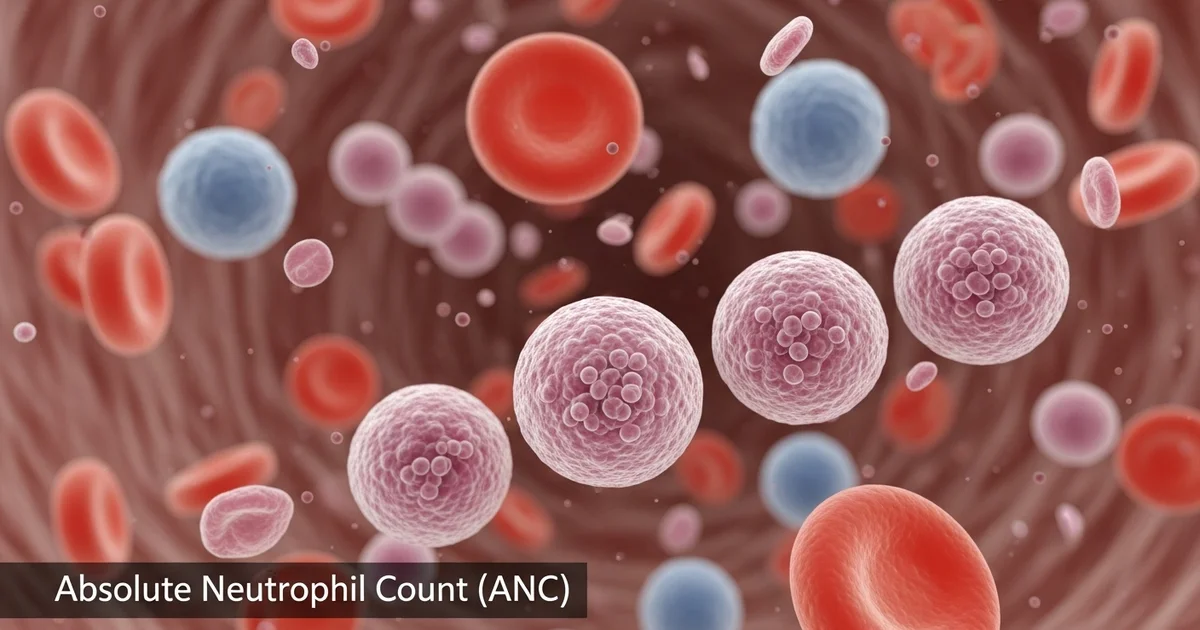
Direct answer: Your absolute neutrophil count (ANC) measures the number of neutrophils, a key type of white blood cell, in your blood. These cells are your body's primary defense against bacterial infections. A normal ANC indicates a healthy immune response, while a low count (neutropenia) can increase your risk of infection. A high count (neutrophilia) often signals that your body is actively fighting an infection or inflammation. This test is a critical part of a complete blood count (CBC).
TL;DR The absolute neutrophil count (ANC) is a vital health marker that measures the quantity of neutrophils in your blood. As the most abundant type of white blood cell, neutrophils are the immune system's first responders, essential for fighting off bacterial and fungal infections. Your ANC result helps doctors assess your immune system's strength and your ability to combat pathogens. It's a standard component of the complete blood count (CBC) panel and provides crucial information about your body's response to infection, inflammation, or other medical conditions.
- Primary Role: Neutrophils are phagocytes, meaning they engulf and destroy invading microorganisms like bacteria and fungi, acting as the frontline of your immune defense.
- What is Neutropenia? A low absolute neutrophil count is called neutropenia. This condition weakens your immune system, making you more susceptible to infections. It can be caused by certain medications (like chemotherapy), autoimmune diseases, or bone marrow problems.
- What is Neutrophilia? A high neutrophil count, or neutrophilia, typically indicates that your body is actively fighting an infection. It can also be a sign of inflammation, physical stress, or certain types of leukemia.
- The 'Absolute' Count: The 'absolute' count is more precise than a simple percentage because it reflects the actual number of neutrophils in a volume of blood, providing a clearer picture of your immune capacity.
- Clinical Significance: Doctors use the ANC to diagnose conditions, monitor the effects of treatments like chemotherapy, and determine a patient's risk of infection, guiding decisions on preventive measures or treatments.
Want the full explanation? Keep reading ↓
Neutrophils Absolute Count: Role in Bacterial Defense
The Neutrophil Absolute Count is a critical measurement from a Complete Blood Count (CBC) with differential. It quantifies the number of neutrophils, the most abundant type of white blood cell, in your bloodstream. These cells are the cornerstone of the innate immune system and serve as the body's primary defense against bacterial infections.
A physician orders this test to investigate signs of infection, monitor an ongoing illness, or evaluate the body's immune response. Understanding your neutrophil count provides a direct window into your body's capacity to fight off invading pathogens, particularly bacteria. An abnormal count, whether high or low, is a significant clinical indicator that requires careful interpretation.
Neutrophil Absolute Count Reference Ranges
The normal range for the absolute neutrophil count (ANC) varies by age and the specific laboratory conducting the test. These values represent the typical number of neutrophils found in a healthy individual's blood.
| Population | Normal Range | Units | Notes |
|---|---|---|---|
| Adults | 1.8 - 7.7 | x 10³/μL | Also reported as 1,800 to 7,700 cells/μL. |
| Children (1-5 years) | 1.5 - 8.5 | x 10³/μL | Ranges are generally higher in younger children. |
| Newborns (first 24h) | 6.0 - 26.0 | x 10³/μL | Very high at birth, then gradually decreases. |
| Pregnancy (Third Trimester) | 2.5 - 12.0 | x 10³/μL | Mild elevation is a normal physiological response. |
High Count on Your Report? What Neutrophilia Signals
Seeing a high neutrophil count, a condition called neutrophilia, is a common laboratory finding. It most often means your body is actively mounting a defense against a perceived threat. Your bone marrow has increased production of these soldier cells and released them into the bloodstream to travel to the site of a problem.
The most common and clinically significant reason for neutrophilia is a bacterial infection. When bacteria enter the body, chemical signals are released that trigger a rapid surge in neutrophil production and deployment. This is a healthy and necessary immune response.
Is It Always a Bacterial Infection? Other Causes of High Neutrophils
While bacterial infection is the primary suspect, several other conditions can cause neutrophilia. A healthcare provider will interpret the result in the context of your overall health, symptoms, and other lab tests.
Other potential causes include:
- Inflammation: Any condition causing significant inflammation can raise neutrophil counts, even without infection.
- Tissue injury from trauma or surgery.
- Burns.
- Heart attack (myocardial infarction).
- Autoimmune disorders like rheumatoid arthritis or inflammatory bowel disease during a flare-up.
- Medications: Certain drugs are well-known to increase neutrophil levels.
- Corticosteroids (e.g., prednisone) cause neutrophils to move from tissues into the bloodstream.
- Lithium.
- Granulocyte-colony stimulating factor (G-CSF), a drug used to boost white blood cell counts.
- Physiological Stress: The body can release more neutrophils in response to intense physical or emotional stress.
- Vigorous exercise.
- Seizures.
- Anxiety or panic attacks.
- Lifestyle Factors:
- Smoking is a known cause of chronic, low-grade inflammation that leads to a persistently elevated neutrophil count.
- Blood Cancers: Certain malignancies, particularly those of the bone marrow, can cause a dramatic and uncontrolled overproduction of neutrophils.
- Chronic Myeloid Leukemia (CML) is a classic example.
Seeing "Bands" on Your Report? Understanding Left Shift
In cases of severe infection, the laboratory report may mention a "left shift" or the presence of band neutrophils. These are immature neutrophils that have been released early from the bone marrow in response to an overwhelming demand.
Think of it like an army sending out new recruits before their training is fully complete because the battle is so intense. The presence of a significant left shift is a strong indicator of a serious, acute bacterial infection, such as sepsis or pneumonia. It tells the physician that your immune system is under immense pressure.
Low Count Concerning You? Understanding the Risks of Neutropenia
A low absolute neutrophil count, known as neutropenia, is a serious medical condition. Because neutrophils are essential for fighting bacteria, having too few of them leaves you vulnerable to infections. The lower the count, the higher the risk.
The primary danger of neutropenia is the increased risk of severe, life-threatening bacterial and fungal infections. Without enough neutrophils, a minor infection that a healthy person would easily fight off can quickly become a medical emergency.
How is Neutropenia Classified?
Clinicians categorize neutropenia by severity to assess a patient's risk level. The absolute neutrophil count (ANC) is used for this classification.
| Severity | Absolute Neutrophil Count (ANC) | Infection Risk |
|---|---|---|
| Mild | 1,000 to 1,500 cells/μL | Slight increase in risk. |
| Moderate | 500 to 1,000 cells/μL | Moderate risk of infection. |
| Severe | Less than 500 cells/μL | High risk of severe, life-threatening infection. |
| Agranulocytosis | Less than 100 cells/μL | Extreme and immediate risk. |
Patients with severe neutropenia may need to be hospitalized and take special precautions, known as neutropenic precautions, to avoid exposure to germs.
What Causes a Low Neutrophil Count?
Neutropenia can result from decreased production in the bone marrow, increased destruction in the bloodstream, or a combination of both.
Common Causes of Neutropenia:
- Chemotherapy and Radiation: These cancer treatments target rapidly dividing cells. Since neutrophils are produced quickly, they are often a primary casualty, leading to predictable drops in the ANC.
- Viral Infections: While bacterial infections raise neutrophil counts, many viral infections can cause a temporary drop.
- Influenza (the flu).
- Mononucleosis (Epstein-Barr virus).
- Hepatitis.
- HIV.
- Medications: Many drugs besides chemotherapy can suppress bone marrow and cause neutropenia. This is a critical reason to always tell your doctor about all medications and supplements you take.
- Autoimmune Diseases: In conditions like lupus or rheumatoid arthritis, the body's own immune system may mistakenly target and destroy neutrophils.
- Severe, Overwhelming Infection (Sepsis): In some cases of sepsis, the demand for neutrophils is so high that the bone marrow cannot keep up, and the cells are used up faster than they can be replaced, leading to a paradoxical drop in the count.
- Bone Marrow Disorders: Conditions like aplastic anemia, myelodysplastic syndromes (MDS), or leukemia can impair the bone marrow's ability to produce healthy neutrophils.
- Nutritional Deficiencies: Severe deficiencies in Vitamin B12, folate, or copper can disrupt cell production in the bone marrow and lead to neutropenia.
How Do Neutrophils Actually Fight Bacteria?
Neutrophils are highly specialized killing machines. They are the first immune cells to arrive at the site of a bacterial invasion, often within minutes. Their entire structure is designed for one purpose: to find, engulf, and destroy pathogens.
This process is a cornerstone of your body's defense system.
Step-by-Step: The Neutrophil Attack Plan
- Chemotaxis (The Hunt): When bacteria invade a tissue, damaged cells and other immune cells release chemical distress signals called chemokines. Neutrophils in the bloodstream detect these signals and follow the chemical trail directly to the source of the infection.
- Adhesion and Migration (Leaving the Bloodstream): Once near the target, neutrophils stick to the walls of the small blood vessels. They then squeeze through gaps in the vessel wall to enter the infected tissue—a process called diapedesis.
- Phagocytosis (Engulf and Devour): The neutrophil identifies the bacterium as a foreign invader. It then extends its cell membrane to surround the bacterium, pulling it inside into a sealed compartment called a phagosome.
- Degranulation (Unleashing the Weapons): The neutrophil contains specialized granules filled with powerful enzymes and antimicrobial proteins. These granules fuse with the phagosome, releasing their toxic contents directly onto the trapped bacterium.
- Respiratory Burst (The Chemical Bomb): In a final, powerful attack, the neutrophil rapidly produces reactive oxygen species (ROS), including bleach-like substances. This "respiratory burst" creates a highly toxic environment that kills the pathogen.
- NETosis (The Final Sacrifice): In some cases, a neutrophil will sacrifice itself by casting out its own DNA like a net. This "Neutrophil Extracellular Trap" (NET) is sticky and embedded with antimicrobial proteins, trapping and killing nearby pathogens even after the neutrophil itself has died.
The result of this battle is often the formation of pus, which is composed primarily of dead neutrophils, cellular debris, and killed bacteria.
What is a CBC with Differential?
The neutrophil absolute count is not a standalone test. It is part of a CBC with differential, a panel that provides a comprehensive look at the cells in your blood.
A standard CBC measures:
- Red Blood Cells (RBCs): Carry oxygen.
- Hemoglobin & Hematocrit: Assess oxygen-carrying capacity.
- Platelets: Help with blood clotting.
- White Blood Cells (WBCs): Total count of all immune cells.
The "differential" part is what breaks down the total WBC count into its five main types, providing both a percentage and an absolute count for each:
- Neutrophils: Fight bacteria.
- Lymphocytes: Fight viruses, produce antibodies.
- Monocytes: Clean up debris, fight chronic infections.
- Eosinophils: Fight parasites, involved in allergic reactions.
- Basophils: Involved in allergic responses.
Looking at the neutrophil count in the context of the full differential gives your doctor a much clearer picture. For example, high neutrophils with normal lymphocytes strongly suggests a bacterial process, whereas low neutrophils with high lymphocytes points more toward a viral illness.
Frequently Asked Questions
What is the most common cause of abnormal Neutrophils levels?
The most common cause of an abnormally high neutrophil count (neutrophilia) is an acute bacterial infection. The body rapidly produces these cells to fight off the invading bacteria. For an abnormally low neutrophil count (neutropenia), common causes include viral infections (like the flu), certain medications (especially chemotherapy), and autoimmune disorders.
How often should I get my Neutrophils tested?
A neutrophil count is not a routine screening test for the general population. Your doctor will order a CBC with differential, which includes the neutrophil count, when you have symptoms that suggest an infection, inflammation, or a possible blood disorder. These symptoms might include fever, chills, body aches, or severe fatigue. It is also used regularly to monitor patients undergoing chemotherapy or those with known bone marrow conditions.
Can lifestyle changes improve my Neutrophils levels?
You cannot directly and precisely control your neutrophil count through lifestyle alone, as it is primarily regulated by your body's immediate health needs. However, you can support a healthy immune system, which allows your body to produce and deploy neutrophils effectively when needed. This includes maintaining a balanced diet rich in vitamins and minerals (especially B12, folate, and copper), getting regular moderate exercise, ensuring adequate sleep, and managing stress. Quitting smoking is also crucial, as smoking can cause chronic inflammation and artificially elevate your baseline neutrophil count.
Medical Disclaimer
This article is for educational purposes only. Always consult a healthcare professional.