Worried About Your Neutrophil Count? A Guide to What's Normal
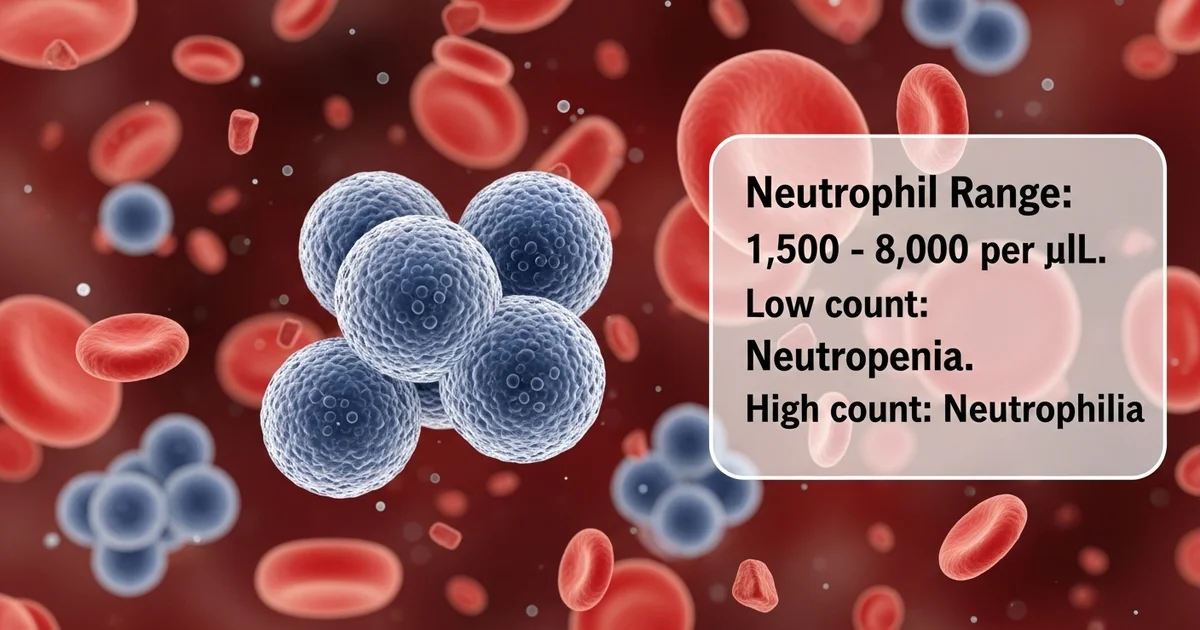
Direct answer: A normal neutrophil range is typically 1,500 to 8,000 neutrophils per microliter of blood, but this can vary by lab. Neutrophils are a type of white blood cell crucial for fighting infections. A low count is called neutropenia, which increases infection risk. A high count is called neutrophilia, often indicating your body is fighting an infection or inflammation. Abnormal levels require a doctor's evaluation to determine the underlying cause and appropriate next steps.
TL;DR Neutrophils are your body's first line of defense, a type of white blood cell that rushes to fight off infections, especially those caused by bacteria. A complete blood count (CBC) test measures their levels, and understanding the results is key to monitoring your health. A normal range is important, as levels that are too low (neutropenia) or too high (neutrophilia) can signal不同的健康问题。
What are Neutrophils? They are the most abundant type of white blood cell, acting as your immune system's 'first responders' to injury or infection.
Normal Neutrophil Range: A typical healthy range is between 1,500 and 8,000 neutrophils per microliter (cells/mcL) of blood. This can also be expressed as 40% to 60% of your total white blood cell count.
What is Neutropenia? This is a condition where your neutrophil count is too low (below 1,500 cells/mcL). It weakens your immune system, making you more vulnerable to infections. Common causes include viral infections, autoimmune diseases, vitamin deficiencies, and certain medications like chemotherapy.
What is Neutrophilia? This is a condition where your neutrophil count is too high (above 8,000 cells/mcL). It's most often a sign that your body is actively fighting an infection. Other causes can include inflammation, physical stress, certain cancers, or a reaction to medications like steroids.
Why It Matters: Abnormal neutrophil levels are not a diagnosis on their own but a clue for your doctor. They indicate that something is affecting your immune system, prompting further investigation to find the root cause.
Next Steps: If your blood test shows an abnormal neutrophil count, your doctor will interpret it in the context of your overall health and other lab results to determine if treatment or further testing is needed.
Want the full explanation? Keep reading ↓
Normal Neutrophil Range: Neutropenia vs Neutrophilia
Neutrophils are the unsung heroes of your immune system. As the most abundant type of white blood cell, they are your body's first line of defense against bacterial and fungal infections. When your doctor orders a complete blood count (CBC) with differential, the neutrophil count is a critical piece of the puzzle, providing a snapshot of your body's immune response.
An abnormal neutrophil count, whether too low (neutropenia) or too high (neutrophilia), can be the first sign of an underlying medical condition. Understanding what these numbers mean is the first step toward addressing your health. This article breaks down the normal ranges, the causes and implications of abnormal levels, and what you can do about it.
Understanding Your Neutrophil Count: What Do the Numbers Mean?
When you look at your lab report, you will likely see a neutrophil value listed as both a percentage (%) and an absolute count. While the percentage tells you the proportion of neutrophils relative to other white blood cells, the most clinically significant number is the Absolute Neutrophil Count (ANC). The ANC gives the precise number of neutrophils in a microliter of blood, offering a true measure of your body's infection-fighting capacity.
Neutrophils are a type of phagocyte, which means they work by engulfing and digesting harmful pathogens like bacteria. A healthy supply of these cells is essential for a rapid and effective immune response. For a deeper understanding of their function, it's helpful to learn about the [role of the absolute neutrophil count in bacterial defense] and how these cells are mobilized during an infection.
Normal Absolute Neutrophil Count (ANC) Ranges
Reference ranges for neutrophils can vary based on age and the specific laboratory conducting the test. However, the following table provides generally accepted values. Always compare your results to the reference range provided on your lab report.
| Population | Normal Range | Units | Notes |
|---|---|---|---|
| Adults | 1,500 - 8,000 | cells/µL | Also written as 1.5 - 8.0 x 10⁹/L. |
| Children (1-10 years) | 1,500 - 8,500 | cells/µL | Values can be higher in the first year of life. |
| Newborns (first 24h) | 6,000 - 26,000 | cells/µL | Levels are naturally very high at birth and decrease rapidly. |
| Pregnancy (Third Trimester) | 5,000 - 15,000 | cells/µL | A moderate increase is a normal physiological response. |
Note: µL stands for microliter.
Neutrophils Too Low? Understanding Neutropenia
If your Absolute Neutrophil Count (ANC) falls below the lower limit of the normal range (typically <1,500 cells/µL in adults), you have neutropenia. This condition signifies a shortage of your primary infection-fighting cells. The most significant concern with neutropenia is an increased susceptibility to infections, particularly bacterial ones.
The lower the neutrophil count, the higher the risk. Mild neutropenia may not cause any issues, but severe neutropenia can be life-threatening, as the body cannot mount an effective defense against common bacteria.
Classifying the Severity of Neutropenia
Clinicians categorize neutropenia by severity to assess infection risk and determine the urgency of treatment.
- Mild Neutropenia: ANC of 1,000 to 1,500 cells/µL. The risk of infection is relatively low.
- Moderate Neutropenia: ANC of 500 to 1,000 cells/µL. There is a moderate risk of infection.
- Severe Neutropenia: ANC below 500 cells/µL. This carries a high risk of severe, life-threatening infections. An ANC below 200 cells/µL is sometimes called agranulocytosis and is a medical emergency.
What Causes Low Neutrophil Levels?
Neutropenia can result from three primary mechanisms: decreased production in the bone marrow, increased destruction in the bloodstream, or sequestration (trapping) in the spleen.
1. Problems with Bone Marrow Production The bone marrow is the factory for all blood cells, including neutrophils. Any condition that damages or suppresses the bone marrow can lead to neutropenia.
- Chemotherapy and Radiation Therapy: These cancer treatments are a very common cause of neutropenia because they target rapidly dividing cells, including cancer cells and neutrophil precursors in the bone marrow.
- Leukemia, Lymphoma, and Myelodysplastic Syndromes (MDS): Cancers of the blood and bone marrow can crowd out healthy cell production.
- Aplastic Anemia: A rare but serious condition where the bone marrow fails to produce enough new blood cells.
- Vitamin Deficiencies: Severe deficiencies in Vitamin B12, folate, or copper can impair DNA synthesis and cell division, leading to ineffective production of neutrophils.
- Congenital Disorders: Rare genetic conditions like Kostmann syndrome or cyclic neutropenia cause chronic, severe neutropenia from birth.
2. Increased Destruction or Use of Neutrophils Sometimes, neutrophils are produced normally but are destroyed or used up too quickly in the circulation.
- Autoimmune Disorders: Conditions like Lupus (SLE) and Rheumatoid Arthritis can cause the immune system to mistakenly create antibodies that attack and destroy its own neutrophils.
- Severe Infections (Sepsis): During overwhelming infections, neutrophils are consumed faster than the bone marrow can replace them, leading to a paradoxical drop in their numbers.
- Hypersplenism: An enlarged and overactive spleen can trap and remove blood cells, including neutrophils, from circulation.
3. Medication-Induced Neutropenia Besides chemotherapy, a wide range of medications can cause neutropenia as an idiosyncratic side effect.
- Antibiotics: (e.g., sulfonamides, penicillin)
- Anti-inflammatory Drugs: (e.g., sulfasalazine)
- Antipsychotic Drugs: (e.g., clozapine)
- Anti-thyroid Medications: (e.g., methimazole, propylthiouracil)
- Diuretics: (e.g., hydrochlorothiazide)
4. Viral Infections Many common viruses can temporarily suppress bone marrow function, leading to a transient dip in neutrophil counts.
- Epstein-Barr virus (mononucleosis)
- Hepatitis A, B, and C
- Human Immunodeficiency Virus (HIV)
- Influenza
Worried About Low Neutrophils? Symptoms to Watch For
Mild neutropenia often has no symptoms. The signs and symptoms that do appear are usually those of the resulting infection, not the low neutrophil count itself. If your ANC is low, it is critical to be vigilant for any sign of infection.
Seek immediate medical attention if you have neutropenia and develop:
- Fever (temperature >100.4°F or 38°C) - This is a medical emergency in a severely neutropenic person.
- Chills or sweating
- Sore throat or painful swallowing
- Mouth sores or ulcers
- Redness, swelling, or pus around a cut or wound
- Persistent cough or shortness of breath
- Abdominal pain
- Painful or frequent urination
Neutrophils Too High? Investigating Neutrophilia
When your Absolute Neutrophil Count (ANC) is elevated above the upper limit of the normal range (typically >8,000 cells/µL in adults), the condition is called neutrophilia or neutrophilic leukocytosis. This is a very common finding on a CBC and usually indicates that your body is mounting an immune response.
Neutrophilia means your bone marrow is working overtime to produce and release more neutrophils into the bloodstream to fight a perceived threat. Often, this includes releasing immature neutrophils, a finding known as a "left shift," which signals a strong, active response.
What Causes High Neutrophil Levels?
Neutrophilia is a sign, not a disease itself. The key is to identify the underlying cause, which can range from benign to serious.
1. The Most Common Cause: Infections The primary job of neutrophils is to fight infections, especially those caused by bacteria.
- Bacterial Infections: This is the most frequent cause. Localized infections (like an abscess, cellulitis, or pneumonia) and systemic infections (like sepsis) trigger a strong neutrophil response.
- Fungal Infections: Certain fungal infections can also cause neutrophilia.
- Early Viral Infections: While many viral infections later cause neutropenia, some can cause a brief spike in neutrophils during the initial phase.
2. Inflammation and Tissue Damage Any condition that causes significant inflammation or stress on the body can raise neutrophil counts, even without an infection.
- Heart Attack (Myocardial Infarction): Damaged heart tissue releases inflammatory signals that trigger neutrophilia.
- Burns, Trauma, or Major Surgery: The body's stress response to injury includes releasing a surge of neutrophils.
- Autoimmune and Inflammatory Conditions: Flare-ups of conditions like Rheumatoid Arthritis, Inflammatory Bowel Disease (IBD), Vasculitis, or Gout can cause chronic or intermittent neutrophilia.
3. Medications Several common medications are known to increase neutrophil counts.
- Corticosteroids (e.g., Prednisone): These powerful anti-inflammatory drugs cause neutrophils to be released from the bone marrow and prevent them from leaving the bloodstream, leading to a sharp, artificial increase in the ANC.
- Lithium: Used to treat bipolar disorder.
- Epinephrine (Adrenaline): Used in emergencies like anaphylaxis.
- G-CSF (Granulocyte Colony-Stimulating Factor): A medication specifically given to boost neutrophil production, often in patients undergoing chemotherapy.
4. Cancers of the Blood and Bone Marrow While less common, persistently high neutrophil counts can be a sign of a myeloproliferative neoplasm (MPN), a type of chronic blood cancer.
- Chronic Myeloid Leukemia (CML): Characterized by a very high white blood cell count, predominantly composed of neutrophils in all stages of maturation.
- Polycythemia Vera (PV): Primarily involves overproduction of red blood cells, but high neutrophil and platelet counts are also common.
- Essential Thrombocythemia (ET): Primarily involves overproduction of platelets, but a mildly elevated neutrophil count is often present.
5. Physiological Stress and Lifestyle Factors Certain non-disease states can also cause a temporary and mild elevation in neutrophils.
- Intense Physical Exertion: Strenuous exercise can cause a temporary spike.
- Emotional Stress or Panic Attacks: The release of adrenaline can briefly raise the count.
- Smoking: Chronic smokers often have a persistently higher baseline neutrophil count due to chronic lung inflammation.
- Pregnancy: A moderate increase in neutrophils is a normal physiological change, especially in the third trimester.
High Neutrophils: When to Be Concerned
A single high neutrophil count, especially if mild, is often not a cause for alarm. It may simply reflect your body fighting off a minor, unfelt infection.
Your doctor will consider further investigation if:
- The neutrophilia is extreme (e.g., ANC > 50,000 cells/µL).
- The high count is persistent over several weeks or months without a clear cause.
- You have associated symptoms like unexplained weight loss, night sweats, fever, or an enlarged spleen (splenomegaly).
- Other blood cell lines (red blood cells, platelets) are also abnormal.
What to Do About an Abnormal Neutrophil Count
An abnormal neutrophil count is a laboratory finding that requires clinical interpretation. It is not a diagnosis. Your next steps will depend entirely on the clinical context.
1. Consult Your Healthcare Provider: Never ignore an abnormal lab result. Discuss the findings with your doctor, who will interpret them based on your medical history, symptoms, and physical exam.
2. Identify the Underlying Cause: The primary goal is to find out why the count is abnormal. This may involve:
- A review of your current medications.
- Screening for infections.
- Testing for inflammatory markers (e.g., CRP, ESR).
- Checking vitamin levels (B12, Folate).
- Autoimmune antibody testing.
- In some cases, a referral to a hematologist (blood specialist) and potentially a bone marrow biopsy may be necessary.
3. Follow Your Treatment Plan: Treatment is always directed at the underlying cause.
- For Neutropenia: This might involve stopping an offending medication, treating an infection with antibiotics, or taking vitamin supplements. In severe cases, medications like G-CSF may be used to stimulate neutrophil production.
- For Neutrophilia: This involves treating the underlying infection or managing the inflammatory condition. If a blood cancer is diagnosed, specific targeted therapies will be initiated by a hematologist.
The journey to understanding your neutrophil count begins with recognizing that it's a dynamic marker of your immune system's activity. Whether low or high, it provides valuable clues that, when paired with a thorough medical evaluation, can guide you and your doctor toward better health.
Frequently Asked Questions
What is the most common cause of abnormal Neutrophils levels?
For neutrophilia (high neutrophils), the most common cause is by far a bacterial infection. The body ramps up neutrophil production to fight off invading bacteria. Other common causes include sterile inflammation (from injury or a heart attack), stress, and medications like corticosteroids.
For neutropenia (low neutrophils), common causes are often viral infections (which can temporarily suppress bone marrow) and medications. Chemotherapy is a very well-known cause, but many other common drugs can also lower neutrophil counts.
How often should I get my Neutrophils tested?
There is no routine schedule for testing neutrophil levels in the general healthy population. A neutrophil count is typically measured as part of a Complete Blood Count (CBC), which is ordered when you have symptoms of an infection, unexplained fatigue, or bruising, or to monitor a known medical condition.
If you are undergoing treatment known to affect neutrophils, such as chemotherapy, your doctor will order frequent testing (sometimes daily or weekly) to monitor for neutropenia. If you have a chronic condition like an autoimmune disease or a myeloproliferative neoplasm, your doctor will establish a regular monitoring schedule based on your specific situation.
Can lifestyle changes improve my Neutrophils levels?
For most significant causes of neutropenia and neutrophilia, lifestyle changes are not a primary treatment but can be supportive.
- For Neutrophilia: If your high count is due to chronic inflammation from smoking, quitting smoking is the most effective lifestyle change. Managing stress and maintaining a healthy weight can also help reduce baseline inflammation.
- For Neutropenia: If your low count is due to a vitamin deficiency (B12, folate, copper), dietary improvements and supplements will directly correct the problem. For other causes, lifestyle changes focus on reducing infection risk. This includes practicing excellent hygiene (frequent hand washing), avoiding sick people, ensuring food is cooked thoroughly, and getting recommended vaccinations (after consulting your doctor).
Medical Disclaimer
This article is for educational purposes only. Always consult a healthcare professional.